



In a Danish garden this autumn, the robin singing by the compost heap may not be the one you met in summer. And you would never know.
There’s a morning in early October when you notice that autumn has arrived in Denmark. The light comes in low and gold over the hedges. The grass is wet with dew until almost noon. And the garden has gone quiet. The blackbirds and warblers that filled June have stopped singing, and the air smells of fallen apples and damp earth.
Almost quiet, anyway. One voice is still going.
From the top of the old fence post, a robin is singing: a clear, wistful, slightly melancholy song that sounds as if it has been tuned for misty mornings. Over the past few days I’ve noticed it singing more than before, not less. When everyone else has fallen silent, that’s a sign that something is going on.
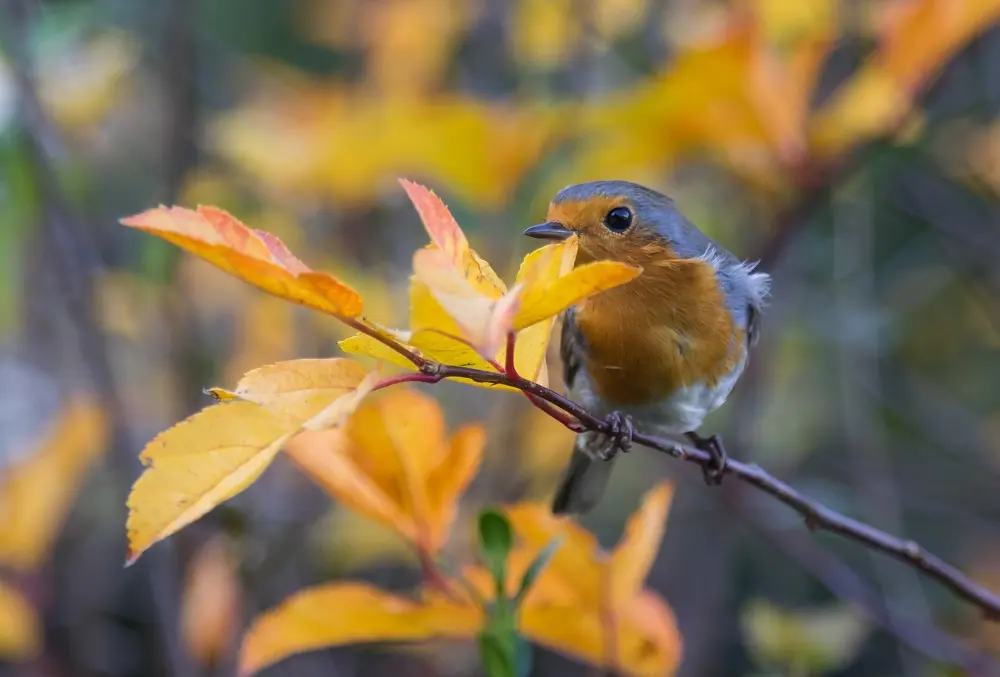
Travellers from the North.
Something is going on, and it happens almost entirely unseen.
Right now, robins (Erithacus rubecula) from the far north are arriving in Denmark. They come from the north of Scandinavia, getting away from the long, hard northern winter, and to them a Danish garden is a soft southern refuge. At almost the same time, many of the robins that spent the summer in Denmark are leaving. They head south to the Netherlands, France, Spain and Portugal. One Danish robin, identified by a small ring on its leg, was once found as far away as Morocco.
So without most of us noticing, the robin in our garden has been replaced by a newcomer from the north that looks exactly the same: the same orange-red breast, the same bright black eyes, the same habit of tilting its head. The bird is new, and so is the territory it has to claim.
A song for every season
That’s why the robin’s song carries through the whole Danish autumn and winter. Most songbirds sing in spring to attract a mate. The robin sings all year round to defend its winter territory. Sometimes it keeps singing after dark, when the garden is just shapes and shadows and the windows of the houses are lit.
Robins also have a habit that’s unusual among Denmark’s small songbirds: the females sing too. They set up their own winter territories and defend them as loudly as the males do. So the song you hear from the hawthorn on a grey November afternoon could just as easily come from a female guarding her patch.
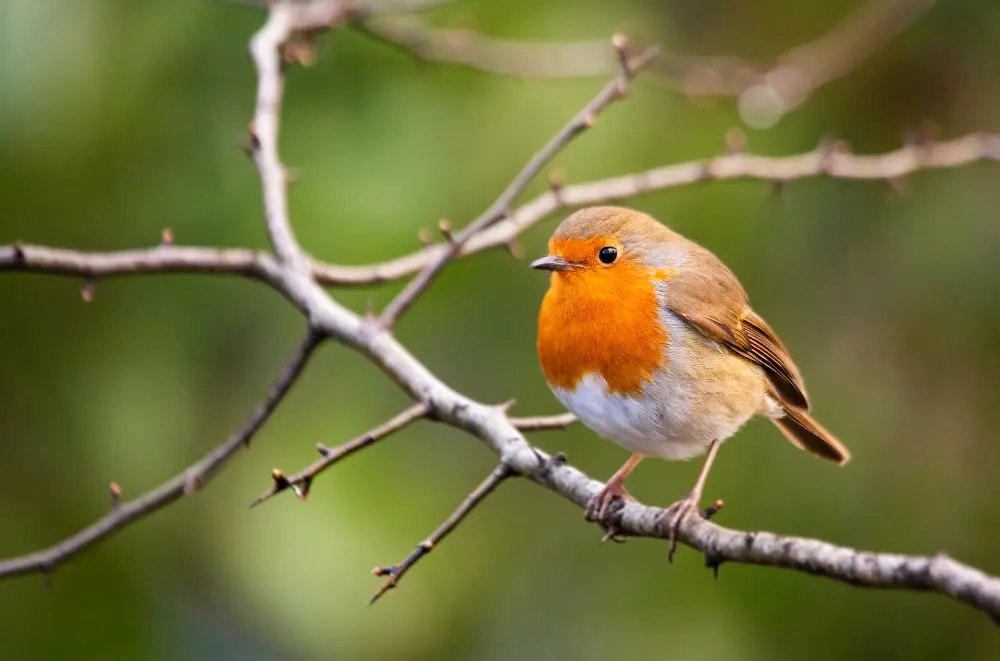
The ones who stay
Not every summer robin leaves. Some males stay through the Danish winter, and they have a good reason. When spring comes, they’re already in place to claim the best territory before the travellers come back.
Staying has a cost, though. These resident males have to hold their ground against the arrivals from the north, and they do it by singing, loudly and clearly, from the most visible perch they can find. This garden is taken.
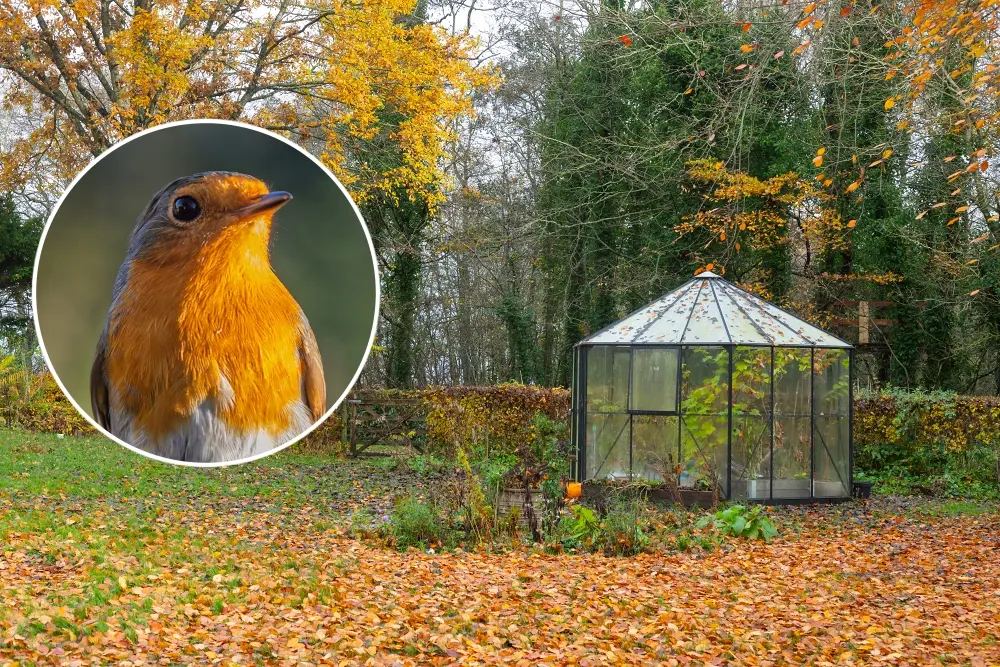
An old friend by the spade
When I work in the garden, it follows me with open curiosity and often comes very close, landing just a few steps from my boots. If I turn up a worm with my digging fork, it’s there almost before the soil has settled. It knows exactly where the good things are in a garden.
Robins are said to love mealworms, which you can buy online or even breed yourself. Mine don’t get that treat. They stay anyway, and every day I’m happy to hear that song in the cool autumn air.
If you visit Denmark this autumn
You don’t need binoculars or a special trip to hear one of the small wonders of the Danish autumn. Walk through a park in Copenhagen, a churchyard in a village on Funen, or a beech wood in Jutland in the morning. When everything else has gone silent, listen for the one bird that hasn’t.
It may be a robin that has spent its whole life here. It may have arrived from Norway or Sweden last week. You’ll never know which, and I think that’s part of the charm.
Did you know?
- Robins sing all year round, including in autumn and winter, to defend their territory.
- Female robins also sing and hold their own winter territories, which is unusual among Danish songbirds.
- A Danish robin with a leg ring has been found as far south as Morocco.
- Bird ringing is a Danish invention. In 1899, the Viborg schoolteacher Hans Christian Cornelius Mortensen put numbered aluminium rings on starlings. It was the first scientific bird ringing, and the method is now used all over the world to follow migrating birds.