



There’s a particular kind of Danish evening in late October when the fog settles low over the fields, the last leaves let go of the beech trees, and the light drains out of the sky by half past five. It is, by any measure, a dark time of year. And yet, across the country, front gardens are glowing orange with carved pumpkins, and children in costumes are knocking on doors.
Halloween in Denmark is a curious thing: an old tradition, forgotten for generations, then welcomed back in a brand-new guise. To understand why it fits so well here, it helps to go back to the beginning – and to the darkness it grew out of.
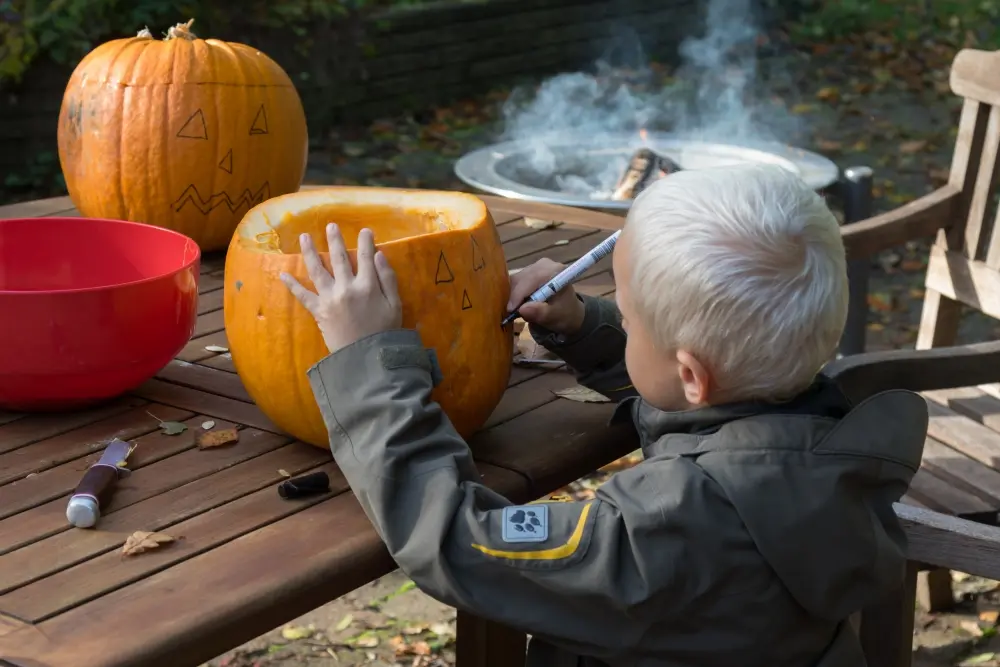
An evening that belonged to the dead.
Long before pumpkins and plastic skeletons, the night of 31 October was allehelgensaften – All Hallows’ Eve. Its roots reach back to the early medieval church, when All Saints’ Day was established to honour the church’s saints and martyrs, with the evening before set aside as a vigil.
But in Denmark, as elsewhere in Europe, the church calendar and older folk belief quietly merged. This was a transitional feast, marking the turn from harvest to winter, from light to dark. And in popular imagination, the boundary between the world of the living and the world of the dead grew thin.
The dead, it was said, were permitted to return this night — to visit their old homes, or to seek redress for old wrongs. So people stayed indoors. They lit candles to keep spirits at bay. Some stayed awake, keeping watch against whatever the darkness might bring. Autumn fog, bare branches and the long Nordic night did the rest of the work; it is not difficult to see how such a night acquired its reputation.
Danish and American Halloween share a distant ancestor in the Celtic festival of Samhain, but the two traditions grew on separate branches. What Denmark kept was something quieter and more sombre: remembrance, darkness, and a wary respect for what lay beyond the candlelight.

The homecoming — in a new costume.
For much of the twentieth century, that old November vigil faded from Danish life. And then it came back – not as a religious observance, but as a pop-culture autumn festival, arriving from America in the late 1990s and taken up with surprising speed by Danish families and shops alike.
Two Halloweens, one pumpkin.
Step across the Atlantic, though, and the festival you meet is a different one. In the United States, Halloween is deliberately frightening: haunted houses, horror films, and a national appetite for gore that Danes have never quite signed up for. It is also genuinely national and genuinely old – an Irish and Scottish inheritance brought over by immigrants in the nineteenth century, absorbed into American life long before it crossed back over the ocean. And it belongs to everyone: children, teenagers, adults, with the grown-ups in costume as enthusiastically as the kids.
The Danish version is none of those things. It is cozy (hygge) rather than scary, an autumn party with pumpkins and candlelight rather than a night built to give you a fright. It is barely thirty years old, which is why it can still feel new to the people celebrating it. And it is, in practice, an event for families with children – something that happens in schools and kindergartens and along village streets, not a season that reshapes the whole retail calendar.
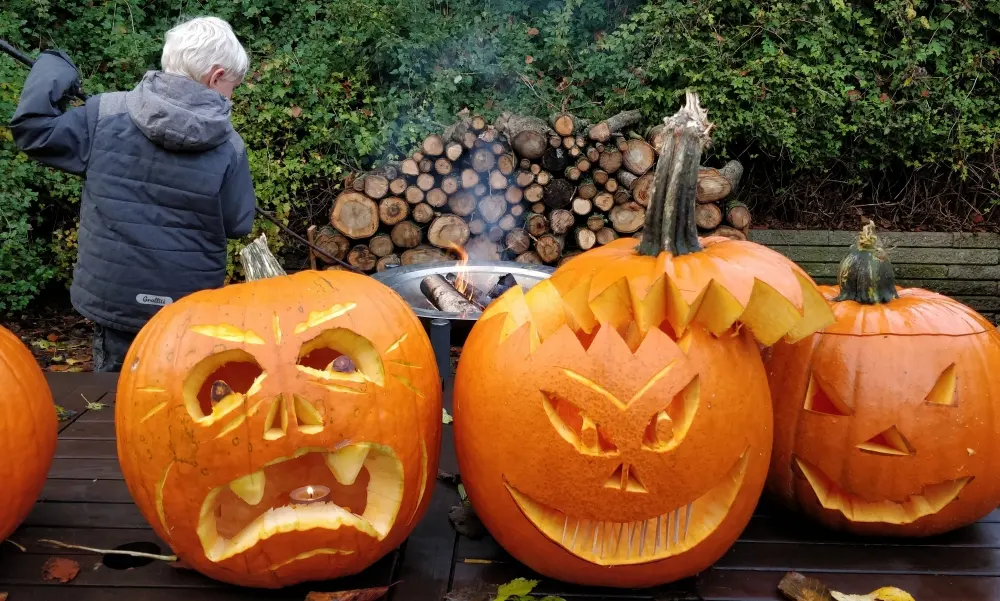
What the two share is the carved pumpkin and the dressing-up, and a certain feeling for the gloom of late October. What they don’t share is intent. America celebrates an evening on which you are allowed to be afraid; Denmark celebrates one on which you are allowed to be together.
The Danish version is cheerful rather than eerie. It is a festival for families with young children – and it happens outdoors, in the crisp air, with a torch in one hand and a bag of sweets in the other. There is dressing up, there is trick-or-treating (increasingly, generously repaid by neighbours), and there are pumpkins: grown across the country, carved into faces by small, determined hands, and set out on doorsteps and in gardens.
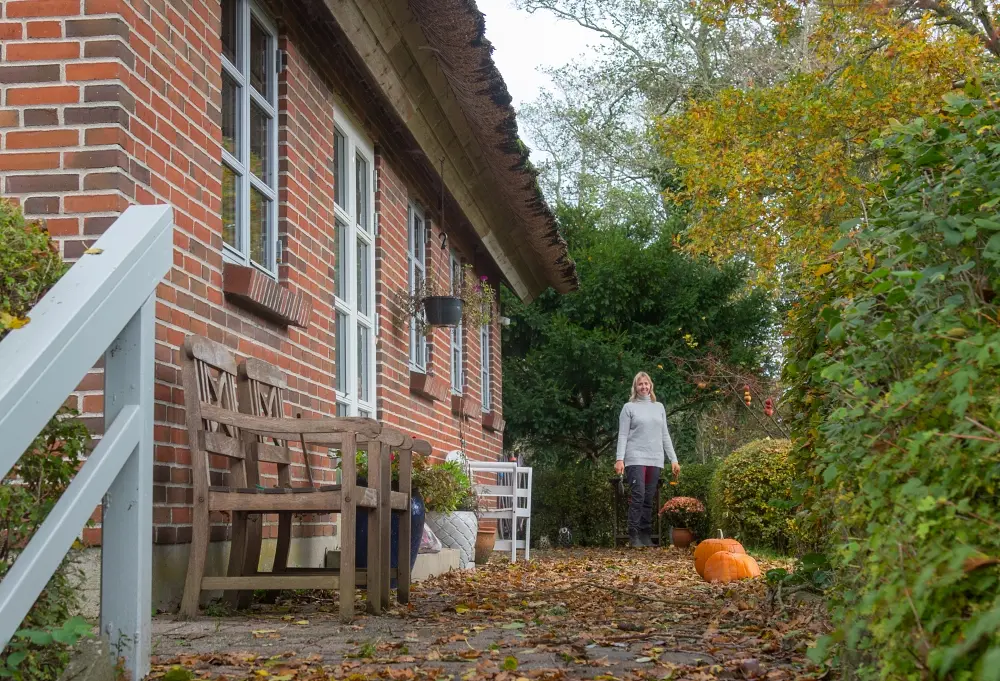
And here is where the Danish twist really shows. Those orange pumpkins look as though they were made for an October in Denmark. Their colour answers the turning leaves; their round, lantern-like glow answers the early dusk. What arrived as an imported celebration has settled comfortably into the Danish autumn landscape – so comfortably that it now feels as though it had always been there.
The season that invites you inside.
Ask a Dane what they love about October, and the answer is rarely the weather. It is what the weather makes possible: hygge.
Halloween and hygge are two responses to the very same darkness. One goes out into it – carved lanterns, costumes, footsteps on wet pavement. The other stays in, closes the door, and makes the indoors irresistible: candles, wool blankets, cake or candy, tea or coffee in a heavy mug while the rain runs down the window.
Where to catch the Danish Halloween.
- Tivoli Gardens, Copenhagen — the amusement garden reopens for its autumn season with pumpkins, lights and decorations throughout late October.
- The countryside – pumpkin selvpluk (pick-your-own) fields open their gates in the weeks before, especially across Funen and Jutland. Most supermarkets sell large, orange pumpkins – displayed in crates and stacks in front of the stores.
- Villages and town streets — informal and local, but on 31 October you will find costumed children working their way from door to door, in a tradition that is barely thirty years old and already feels like home.
- Anywhere, after dark — the fog, the bare trees and the candles in the windows do the rest.