



The night frost is coming and winter is at the door. So who are these small moths gathering on the kitchen window?
It is dark and cold outside. Inside, the kitchen is bright and warm. Dinner is over, and the dishes are waiting. Then I notice a moth tapping lightly against the windowpane. Another brown moth appears and settles – folded flat against the glass. My attention shifts from the dishes to the moths – a welcome distraction. But moths, now? In the cold and darkness of late autumn, on the threshold of winter?
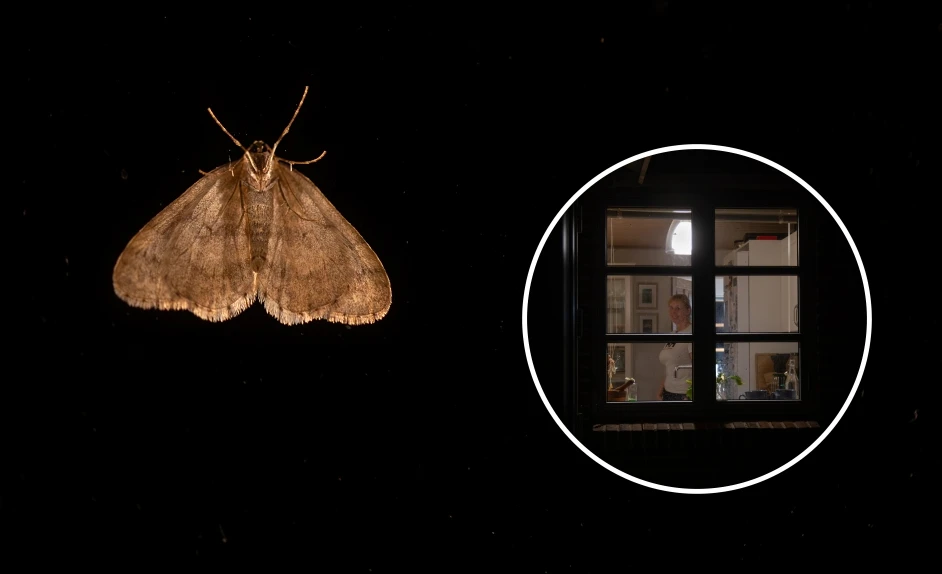
Oh yes! As darkness settles over the Danish landscape and the first frosts threaten, some of the country’s most common moths are out courting in the cold.
Among them is the Winter Moth, one of Denmark’s most common moths. The males fly through the darkness in search of a date – and can detect the scent of a female from a remarkable distance.
What the light is for
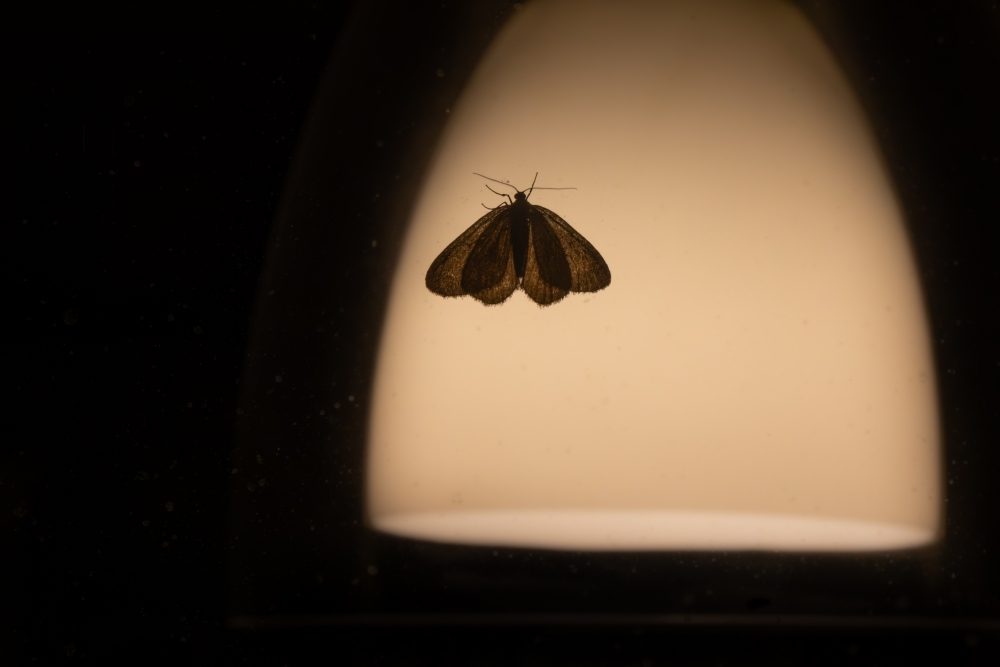
Moths are said to be drawn to light, but the truth is stranger. These species spend their weeks looking for a mate in near-total darkness, mostly by smell. The female climbs a trunk, settles into the bark and releases a pheromone the male can pick up from far off. He works upwind, back and forth between the same few trees.
At a window or a headlight, most experts think something modest goes wrong. A moth navigating by dim, distant sources – the moon, the pale wash of the sky – keeps a fixed angle to that source and flies straight. Hold the same angle to a bright lamp two metres away, and the flight becomes a spiral that ends at the glass. It is not drawn to your kitchen. It is being misled, by a very old piece of navigation firmware that has never had to cope with electricity.
The ones that stay
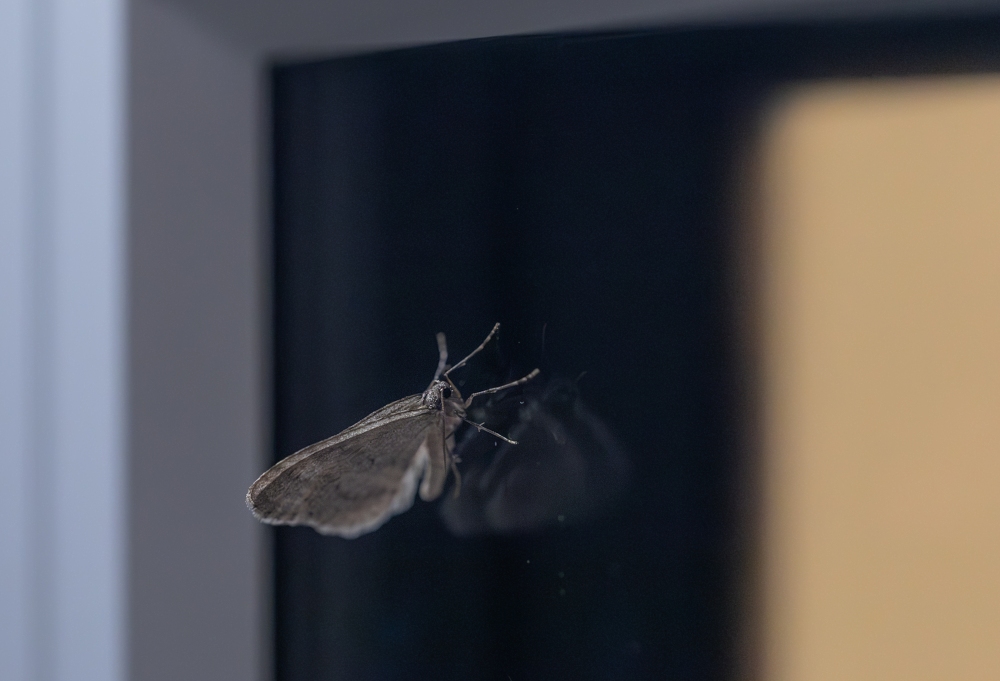
Not everything overwinters by fleeing. A few Danish butterflies – the Brimstone, the Small Tortoiseshell, the Peacock – winter as adults, folded away in a shed, a woodpile or a hollow tree, and on a mild March day one may come briefly out.
The night-flying species – the ones I can observe on my window during the autumn and winter – do the opposite. They spend the summer underground as pupae and exist as adults only now. They emerge to mate and lay their eggs in the bark of broadleaved trees and shrubs – oak, birch, hazel, hawthorn, blackthorn, apple, sycamore, elm. The eggs sit out the frost in crevices and under lichen. Tiny green caterpillars hatch in spring, exactly as the buds open, and the wood briefly becomes a nursery.
How to see them
As darkness falls, keep an eye on the windows. If the weather is favourable, these nocturnal fliers may be drawn to the light spilling from your warm living room.
If you’re feeling adventurous, take a torch outside and check the walls around your outdoor lights. You might even spot one of the wingless females that has crawled up a wall or tree trunk. From there, she releases an alluring scent to attract a mate.
Mottled Umber (Erannis defoliaria) is the bulkiest of the three, with a wingspan of roughly 30–40 mm — the Feathered Thorn (Colotois pennaria) is comparable in size, at 35–45 mm, and the Winter Moth (Operophtera brumata) considerably smaller at 22–28 mm.
A note on names
Mottled Umber — Erannis defoliaria
The Mottled Umber is the most variable: boldly banded in some individuals, plain mottled brown in others, so that it reads less as a wing than as a patch of lichen peeled off a trunk. Males fly from October into December — occasionally later in a mild year — and come to light readily, often in numbers. The females are completely wingless.
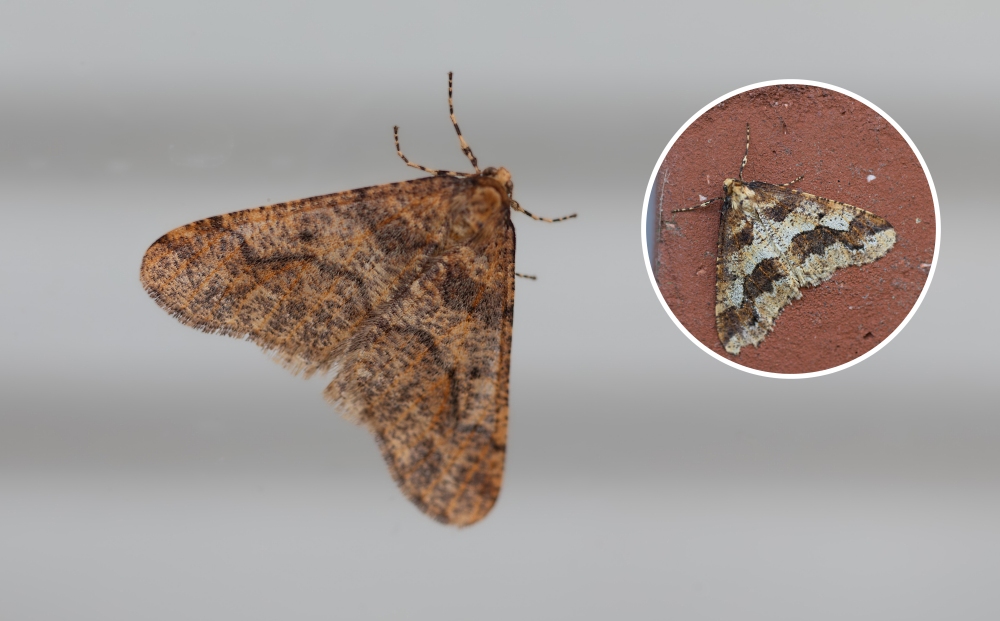
Winter Moth — Operophtera brumata
Smaller and paler, a soft broad tan with fringed wing edges — the species you have most likely seen without knowing it, fluttering in headlights on a country lane. It flies from October to January and copes with real freezing temperatures, which is rare among moths. Its females are flightless too.
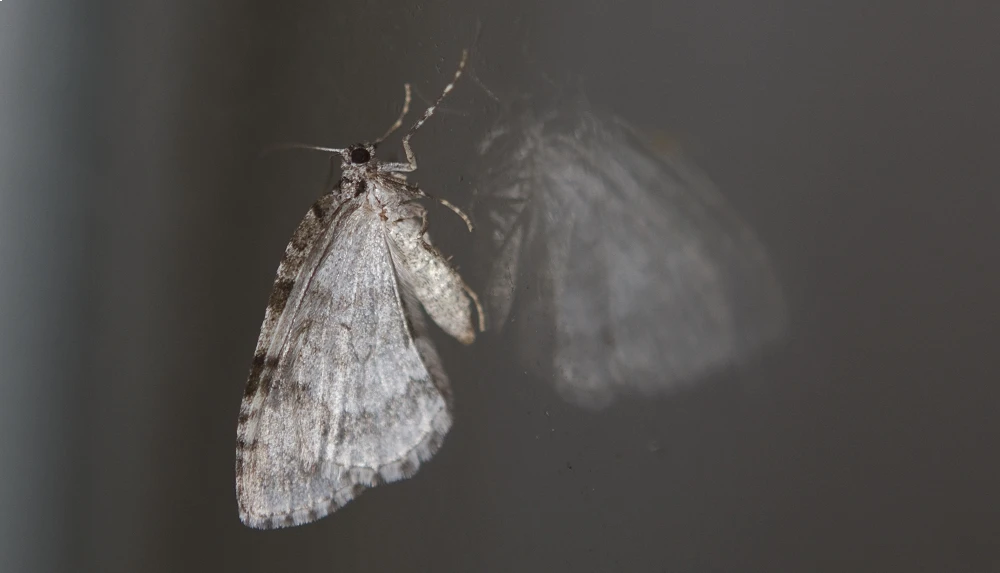
Feathered Thorn — Colotois pennaria
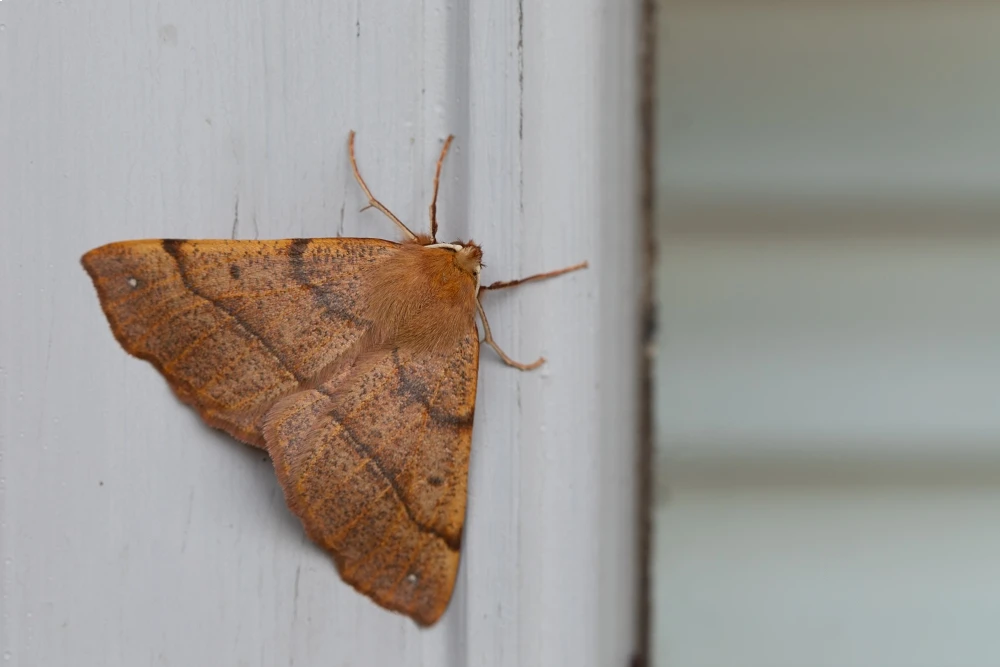
The prettiest of the late arrivals: rich reddish-brown, resting with wings held flat, the forewing tipped with a small hook and the male’s antennae broad and finely feathered, like two small ferns carried in front of the face. Mid-September to early December. Females are rarely seen; they keep low and travel mostly on foot.