



One Night Under the Open Sky
In Denmark, you are never far from the coast — and on a clear summer night, the beach is open to you. Here is how one family of four spent an August evening beneath the stars, and what the rules actually say.
It started as a simple idea: sleep on the beach, just the four of us. My husband, our two boys and I love being outdoors, and in Denmark the sea is never more than a short drive away. So one August evening we packed the car and headed for the coast.
Setting up where the sand meets the water
We found a quiet spot behind the dunes, well away from any summer houses, with the beach stretched out in front of us. The rules are straightforward once you know them. You are allowed to sleep on the beach under the open sky – or under something simple like an upturned boat – but not in a tent or anything that resembles one.
You may also light a small fire on the outer part of the beach, below the high-water line where nothing grows – but only in calm weather. That evening, the weather was on our side.
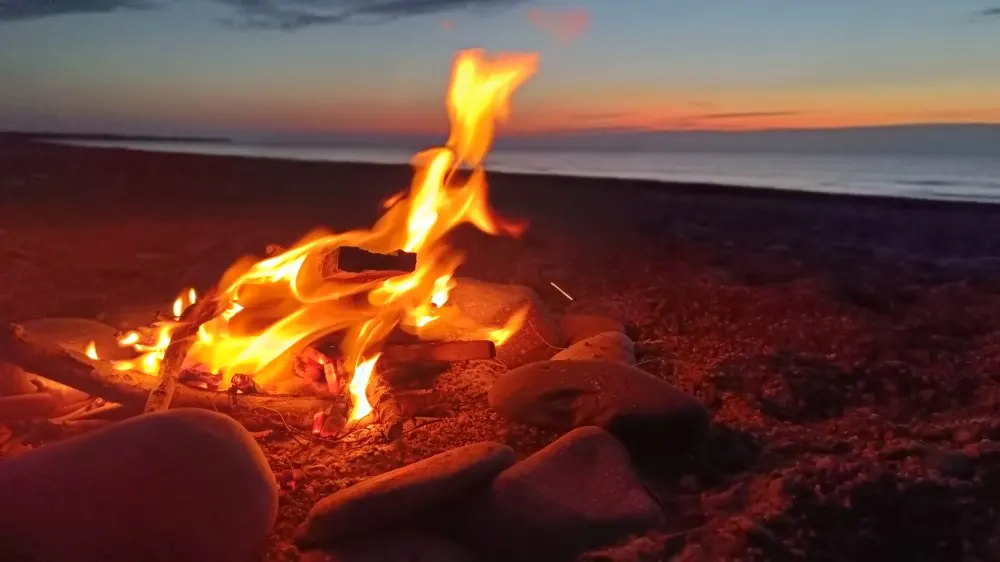
Fire, stars and a moving light.
We gathered driftwood and kept the fire small and slow while the dark settled in. Around midsummer, Denmark holds on to daylight for close to eighteen hours, so night arrives gradually here.
When the stars finally came out, they came all at once. We lay back in the sand and the conversation wandered – first the easy questions, then the bigger ones. How far away is that star? How small are we, really?
Then we spotted it! A steady point of light crossing the sky without blinking. The International Space Station, about 400 kilometres above us. Someone up there was looking down at Earth while we lay in the sand by the dunes, as simple and primitive as it gets.
Safe to explore: Denmark consistently ranks among the safest countries in the world, with very low crime rates and a strong sense of public trust. For visitors, that means being able to walk, cycle and camp along the coast – even into the night.
An empty beach at sunrise.
I woke early to the most beautiful morning sky I have seen in a long time. The sea was unusually calm – barely a wave – and because we had the beach entirely to ourselves, I dared a swim without worrying about a swimsuit.
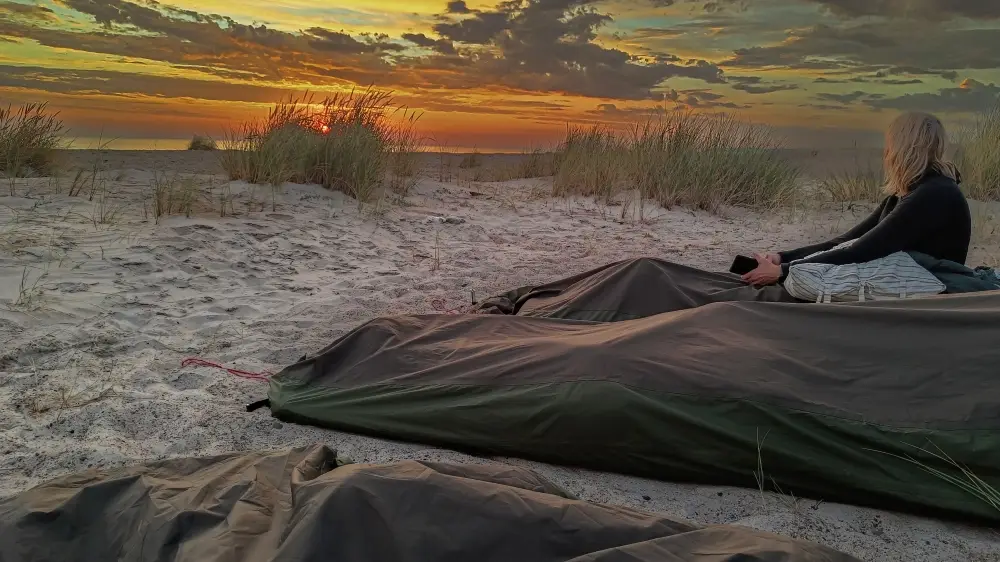
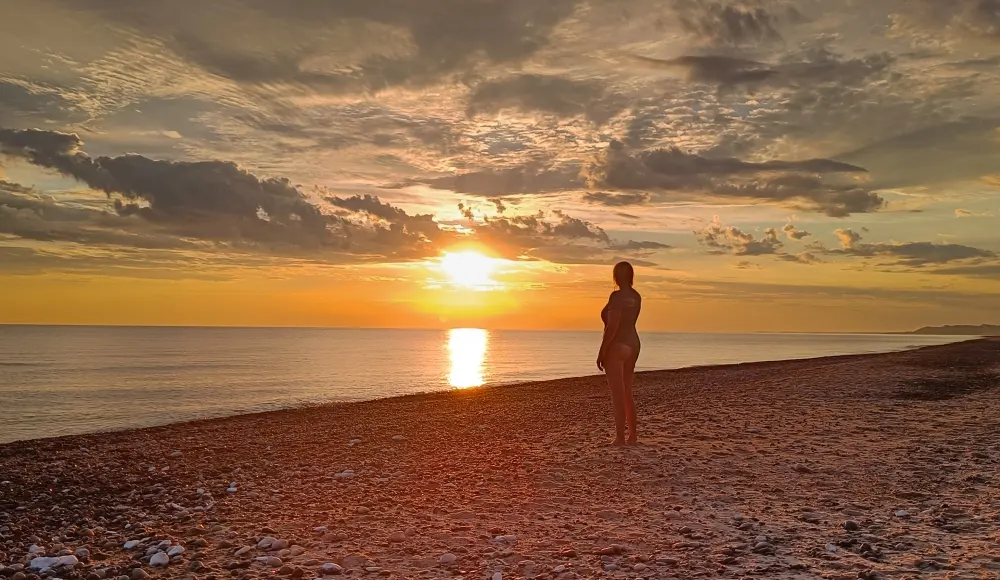
Back on the sand, my husband was already making coffee on the Trangia stove. Soon the boys would wake up too – one summer holiday experience richer.
We packed up and left the beach as we found it, maybe even a little cleaner. That, more than anything, is why this freedom exists.
Sleeping on a Danish beach: the essentials.
- Sleep, don’t camp. (In order not to create competition for the country’s commercial campsites) Bivouacking is allowed – a sleeping bag and mat under the open sky. Tents and anything resembling them are not.
- Most beaches are public in Denmark. On private beaches, stay at least 50 metres from the nearest dwelling.
- Fires stay low and small. A small fire is fine on the outer beach below the high-water line, on bare sand with no vegetation. Never in the dunes. Only in calm weather.
- Watch the season. Bird breeding runs roughly March to August, and some areas restrict access then.
- Respect the water. Check tides and weather, and pitch your spot above the tideline.
- Leave no trace. Take everything home with you.
Denmark has several thousands kilometres of coastline, and almost all of it is open to everyone. A night on the sand costs nothing but a little care — and it is the kind of morning you remember long after the summer ends.
Is it okay to sleep for the night at the public beaches? Well, if the weather is fine you can! However, campers and tents are not allowed. It is okay to grab your sleeping bag and face the stars for a night. To prevent permanent camps you can only stay for one night at the same place.