



Denmark is one of the world’s most digital societies. As AI – Artificial Intelligence, becomes part of everyday work and online discovery, a contrasting desire is growing: to step outside, learn practical skills and experience life without a screen.
In Denmark, much of everyday life begins with a screen.
We use digital identification to contact public authorities, receive official letters, manage banking and make medical appointments. We work, shop, navigate and communicate online. Denmark has repeatedly ranked among the world’s leading countries for digital government, taking first place in the UN’s E-Government Development Index.

Artificial intelligence is now adding another layer to this digital society. It helps businesses analyse data, automate routine tasks, write texts, translate languages and support customer service. Danish strategies for AI also envisage the technology helping to address labour shortages, improve welfare services and support the green transition.
AI is changing not only how we work, but also how we search for knowledge. Instead of visiting a website, online magazine or specialist platform, we are increasingly presented with an instant summary. Google’s AI Overviews and conversational services can condense information into a few convenient paragraphs.
The answer arrives quickly. Sometimes, however, the journey towards the answer disappears.
What the digital world cannot provide.
AI can describe the Danish coastline, but it cannot give you the feeling of seawater against your skin – or the feeling of a cool evening dip in the lake.
It can explain how to light a fire, but it cannot reproduce the scent of woodsmoke, the glow on the faces around it or the warmth returning to cold fingers. It can identify a bird from a photograph, but it cannot recreate the moment when thousands of migrating geese pass overhead.
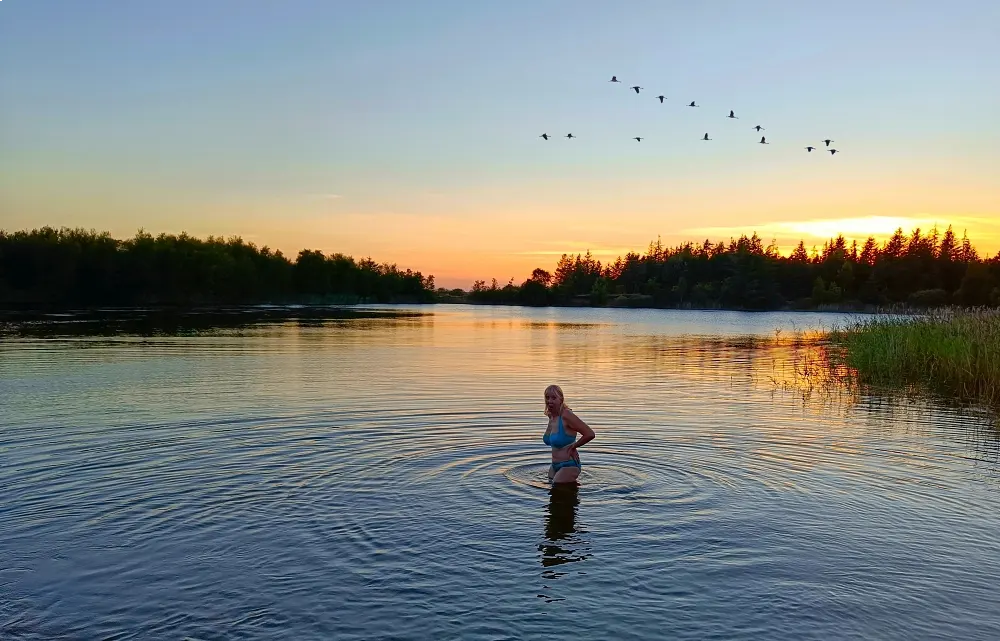
The digital world can inform, inspire and guide us. It cannot replace direct experience.
Perhaps this helps explain the appeal of outdoor life in a highly digital country. Time in nature offers something that screens cannot: physical sensation, unpredictability and undivided attention. Outside, the wind, tide and temperature are not settings that can be adjusted. They are conditions to which we must respond.
That makes nature more than a scenic background. It becomes a place in which we participate.
Denmark’s growing outdoor culture.
Outdoor recreation is not new in Denmark. Walking in the woods, cycling, sailing, angling and visiting the coast have long been part of Danish life. What appears to be changing is the breadth of interest and the language surrounding it.
Terms such as friluftsliv, outdoor living, bushcraft, foraging and micro-adventures have become increasingly familiar. Shelters and primitive campsites make it possible to spend a night outdoors without organising a major expedition. Coastal routes, forests, dark-sky experiences and nature centres invite people to explore landscapes close to home.
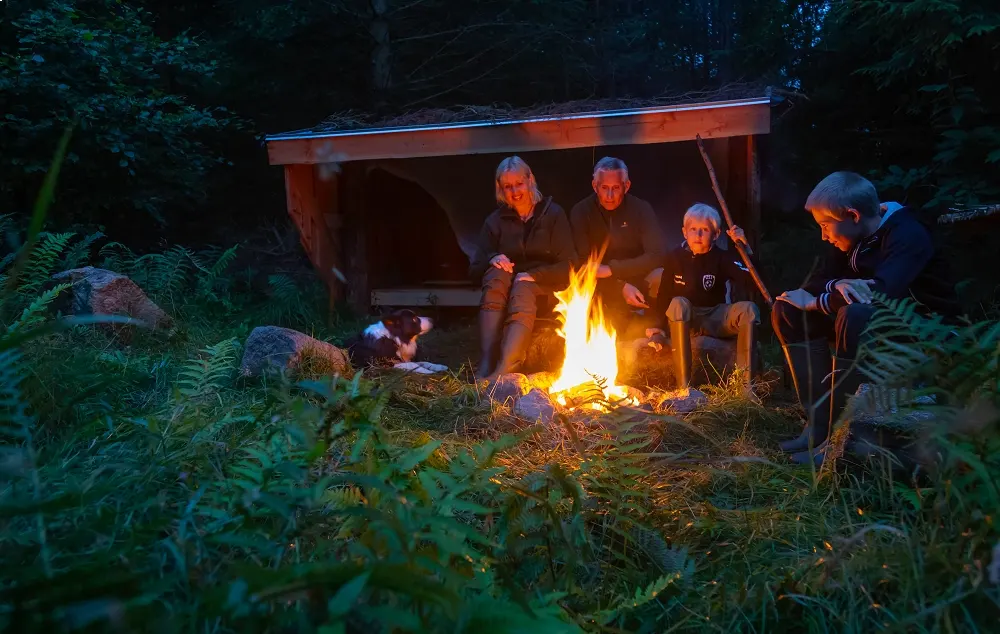
For some, outdoor life means sleeping in a hammock or shelter. For others, it is an evening around a fire, an early-morning fishing trip or a walk through the woods in search of mushrooms. It might involve watching the autumn bird migration, collecting edible seaweed or standing beneath a clear night sky.
The trend is therefore not simply about extreme adventure. Much of its appeal lies in accessible experiences close to home.
Outdoor life can fit into an afternoon, a weekend or even a few hours after work. In a small country surrounded by sea, nature may rarely be truly remote, but it can still feel refreshingly distant from everyday routines.
From recreation to practical knowledge.
Alongside the desire to spend more time outside, there is an interest in learning basic outdoor skills.
These can include:
- lighting and managing a fire safely
- preparing simple meals outdoors
- reading changing weather conditions
- navigating with a map and compass
- fishing and preparing a catch
- recognising edible plants, seaweed and mushrooms
- finding safe drinking water
- understanding tides and coastal conditions
- staying warm, dry and safe outdoors
- practising first aid
Such abilities are enjoyable because they make outdoor experiences richer. They also build confidence. Knowing how to stay comfortable in poor weather or prepare food over a fire changes a person from a passive visitor into an active participant.
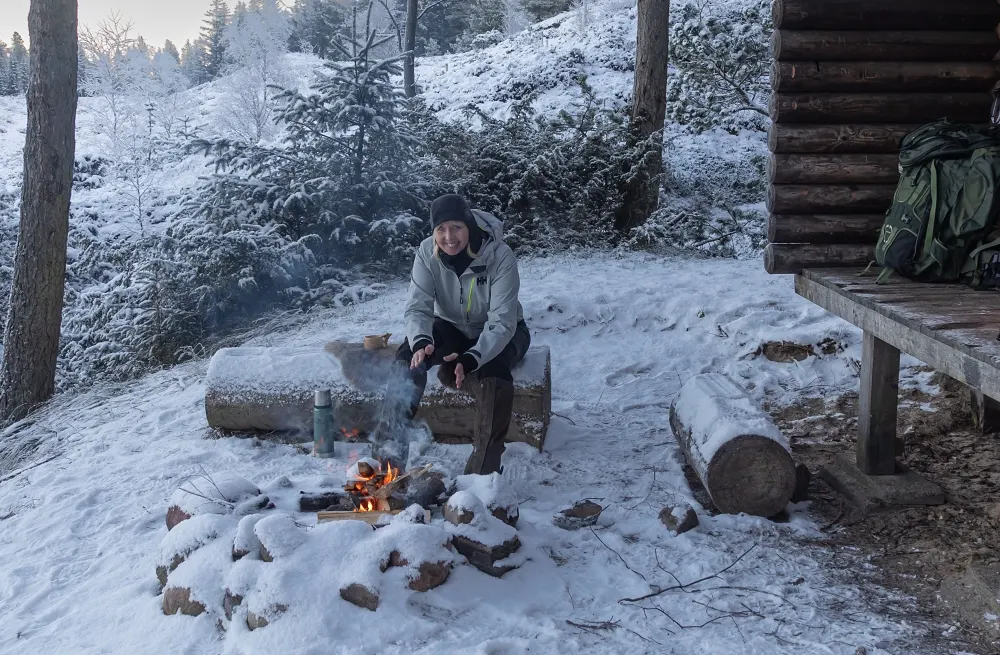
There is an important limit, however. Online guides and AI tools should be treated as introductions, not as final authorities where mistakes can be dangerous. Mushroom identification, foraging, fire safety, coastal conditions and severe weather require reliable local sources, experienced instruction and careful judgement.
A smartphone can be useful outdoors, but it is not a substitute for knowledge.
Outdoor skills as everyday resilience.
Denmark’s digital infrastructure is efficient, but efficiency can create dependency. When identification, payments, communication, navigation and public services are interconnected, interruptions may affect many parts of daily life at once.
That does not mean people should expect digital society to collapse. It does mean that practical competence has renewed value.
The ability to keep warm, prepare a meal without an electric cooker, read a paper map or manage for a period without internet access can be reassuring. These are not only wilderness survival skills. They are small forms of personal and community resilience.
Outdoor knowledge also teaches a useful way of thinking. Conditions change, equipment fails and plans must be adapted. You learn to notice what is happening around you and work with the resources available.
In a world of seamless digital services, that kind of resourcefulness can easily become rusty.
Nature as a social space.
The outdoor trend is not only a reaction to technology, nor is it necessarily about escaping other people. Some of the best experiences in nature are deeply social.
Cooking around a fire creates a different rhythm from eating in front of a screen. A fishing trip leaves room for both conversation and silence. Looking for mushrooms turns a woodland walk into a shared investigation. Waiting for a meteor shower or the arrival of migrating birds gives a group a common focus.
Outdoor activities also reduce the pressure to perform socially. People do not always need to maintain a conversation, because there is something real to do and observe. Wood must be gathered, food prepared, a route followed or a fire watched.
The experience becomes the centre of attention rather than the individuals themselves.
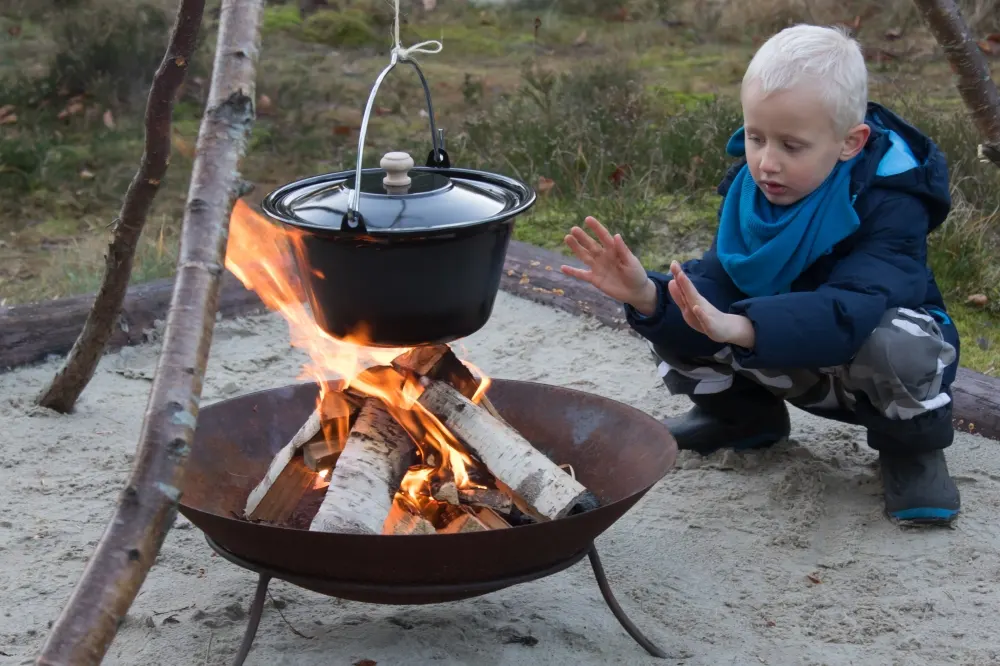
This may be one reason outdoor life appeals across generations. Children can explore and learn through their senses. Adults can slow down and concentrate on practical tasks. Older people can share local knowledge, traditions and stories.
Not anti-technology, but a better balance.
The choice is not between artificial intelligence and outdoor life.
Digital tools can make nature more accessible. Apps can help people locate walking routes, shelters and campsites. Weather services can improve safety. Online communities can introduce beginners to angling, birdwatching or foraging. AI can help explain equipment, suggest recipes and provide a starting point for learning about local species.
Used wisely, technology can lead people outdoors.
The problem arises when the digital answer becomes a substitute for experience or when convenience weakens our ability to act independently. A navigation app is useful, but understanding a map remains valuable. An AI summary can introduce edible seaweed, but identification should be verified through trusted expertise. A fire-lighting video can demonstrate a technique, but only practice teaches how wind and damp wood affect it.
The strongest relationship between technology and nature is therefore one of support rather than replacement.
A particularly Danish opportunity.
Denmark may be exceptionally well placed to develop this balance.
It has an advanced digital society, but also thousands of kilometres of coastline, accessible forests, cycling routes, islands, wetlands and rich birdlife. Its outdoor experiences are rarely about conquering vast wilderness. Instead, they are often modest, local and communal – a night in a shelter, a meal over a fire, a dip in the sea or a quiet morning beside the water.
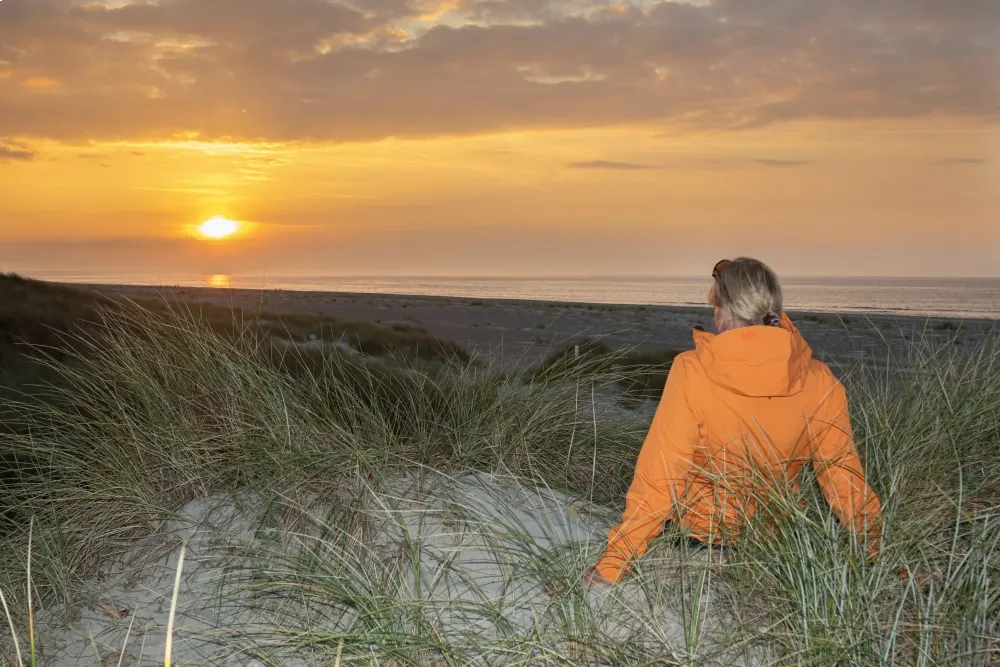
That modest scale may be a strength. Outdoor life does not have to become another expensive lifestyle or competitive project. It can begin by removing shoes on a beach, learning the name of a common coastal plant or watching the sky become dark enough for the first stars to appear.
AI can tell us that Denmark is one of the world’s most digital societies. But it cannot feel sand between its toes, swim through the cold sea or sit beside a crackling fire.
Those experiences still belong to us. And the more digital our lives become, the more valuable they may feel.