



Foraging for Wild Mushrooms in Denmark: A Guide to Staying Safe

For many people, the idea of gathering wild mushrooms for dinner might sound like something from a bygone era. Yet, across Denmark, mushroom foraging is enjoying a real revival. Every autumn, families and nature lovers head into the woods armed with baskets and curiosity, searching for chanterelles, ceps (also known as Steinpilz (German) and Karl Johan-rørhat (Danish)), and other edible treasures.
But while mushroom hunting can be deeply rewarding, it also carries a serious risk: misidentifying a toxic species as an edible one. Even experienced foragers know that some poisonous mushrooms can look deceptively similar to safe varieties. A mistake can lead to severe illness—or worse.
The golden rule: Never eat a mushroom unless you’re absolutely sure
Always identify every specimen before it reaches your frying pan. Bring a reliable mushroom guidebook (there are several excellent ones in English and Danish) combined with an app like Seek by iNaturalist (note, apps are never 100% reliable but can give a good hint) – or, even better, join an experienced mycologist or local foraging group on your first few trips.
Mushrooms to treat with extra caution
Some mushrooms are notoriously dangerous and best avoided altogether if you’re not 100% certain of what you’ve found. Here are a few to be wary of:
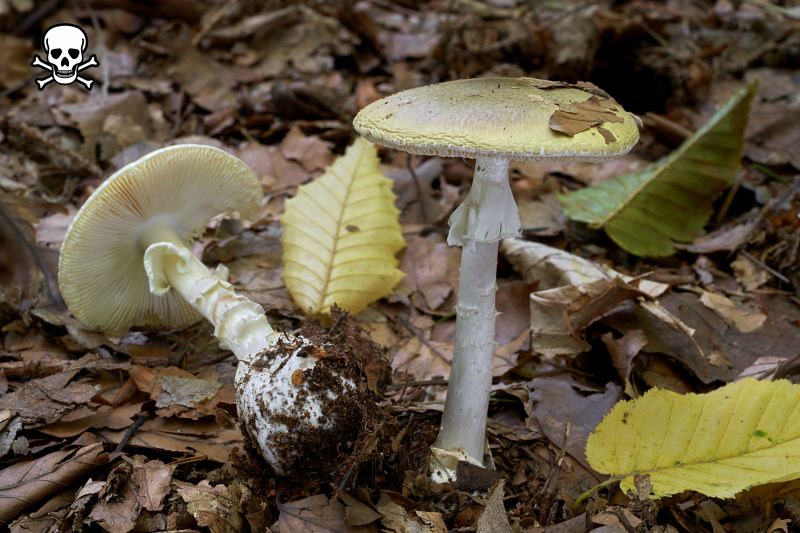
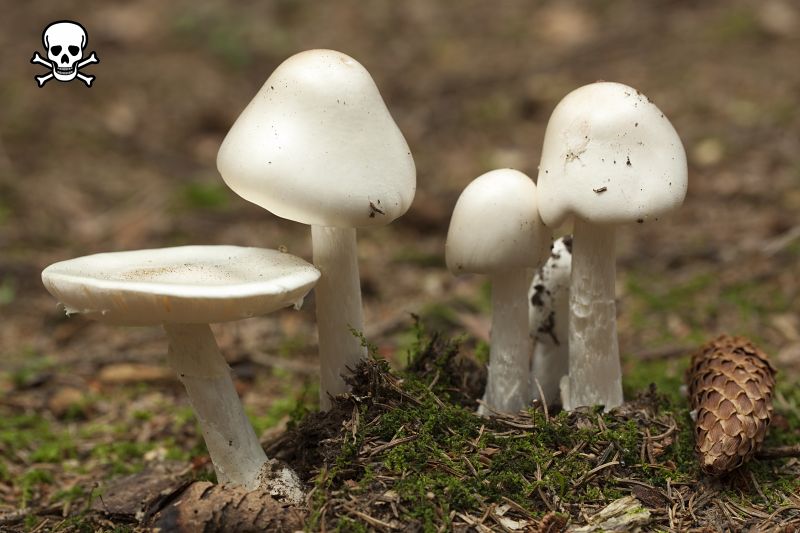
- The Death Cap (Amanita phalloides) – among the deadliest mushrooms in Europe, responsible for most fatal poisonings.
- The Yellow Stainer (Agaricus xanthodermus) – easily confused with edible field mushrooms, but causes serious stomach upset.
- All Amanitas – these mushrooms often have white gills, a bulbous base (sometimes wrapped in a “bag”), and a ring on the stem. Many are deadly.
- Small brown mushrooms – unless you’re sure it’s an Autumn Chanterelle (Craterellus tubaeformis), avoid them.
- Any mushroom with red colouring – while not all red mushrooms are toxic, many dangerous species display this warning hue.
- Young, undeveloped mushrooms – those still in their “egg” stage can be extremely difficult to identify, even for experts.

Smart foraging: Start simple
If you’re new to mushroom hunting, focus on a handful of easy-to-recognise species such as chanterelles, ceps, and oyster mushrooms. Learn their features in different growth stages and environments, and always double-check with a guidebook or expert before eating.


The joy of learning in nature
One of the best ways to build confidence is to join a guided foraging walk. Many Danish nature centres and local associations host mushroom tours each autumn, where you can learn safe identification tips while exploring the forest with others who share your curiosity.
Foraging is a wonderful way to connect with nature, but safety must always come first. When in doubt—leave it out.