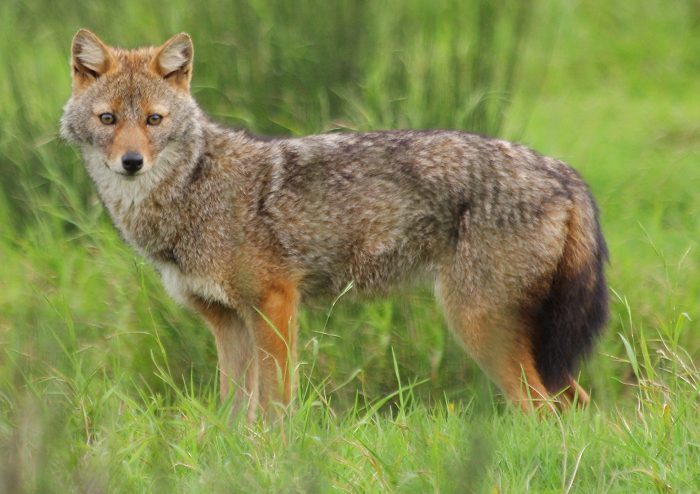
Golden Jackals (Canis aureus) have been seen in Denmark for the first time ever and are now considered a new species in the country. The animals are crossing from the German border into Denmark. Credit: Prabukumar84, CC-BY 4.0., Wikipedia.
Danish nature has become wilder and more exciting in recent years.
Large nature restoration projects have succeeded with support from private foundations. New species invade and returns to Denmark. Denmark is seemingly becoming a wilder by the day. Wolves have returned after a long absence, the European jackal has made its first ever appearance, the Golden Eagle is breeding again. Wild boars have returned in parts of the country and wild beavers have been spotted north of the Lim Fjord, Northern Denmark for the first time in 1,000 years.
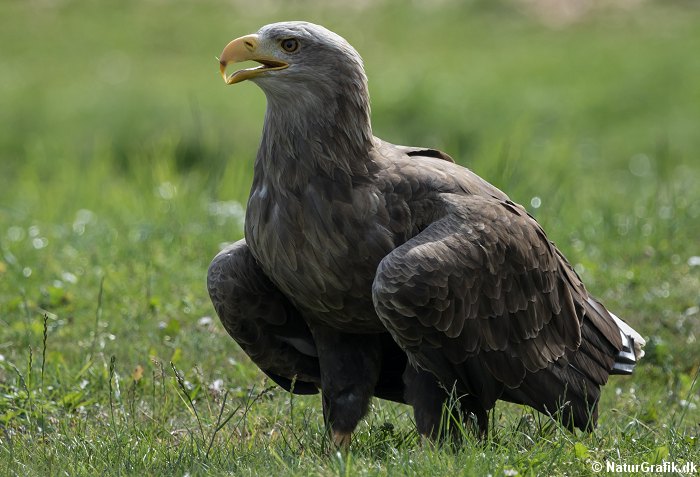
The Whitetailed Eagle is now to be find in most parts of Denmark. In 1996, the white-tailed eagle re-colonised back to Denmark and the population has been growing ever since.
White-tailed eagle.
The white-tailed eagle is North Europe’s largest bird of prey. With its impressive wingspan of up to 2.5 m, and the very square flight silhouette, it rather resembles a flying door. Adult sea eagles can also be recognised by the white tail, the bright head and yellow beak.
In Denmark, the white-tailed eagles breed at large lakes and fjords. The population is increasing, with most breeding pairs found on Lolland, South Sealand, Funen and Jutland.
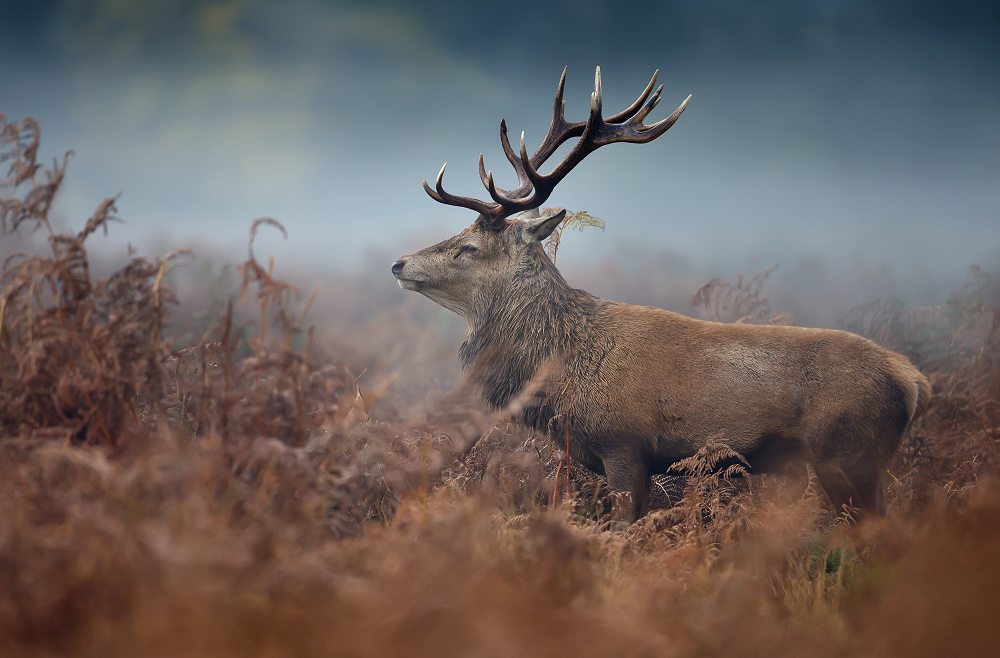
There is a good chance to see reed deers in the wild in Denmark. Credit: Dalia Kvedaraite, Dreamstime.com
Facing Denmarks largest land-mammal.
The red deer is the largest land-mammal in Denmark. The red deer (Cervus elaphus) population in Denmark became almost extinct in recent historical times due to over-hunting. The species has subsequently recovered within remote areas, but non-Danish individuals have been introduced at several localities. However, the current population of red deer in Denmark is genetically very close to the original Danish red deer.
The population of red deer in Denmark has grown dramatically in recent years. There is a good chance to see reed deers in the wild in Denmark. Especially in the remote areas in Western Jutland near the plantations and coastal moorlands. The largest herd of red deer ever seen in Denmark has been counted in a field in western Jutland. Over 1,000 deer are roaming near Vind Hede just southwest of Holstebro.
Appearance The summer coat is reddish brown to brown and the winter coat is brown to grey. There are no spots on the adult coat. Stags have large, highly branched antlers and the number of branches increases with age.
Red deer graze on grasses and dwarf shrubs e.g. heather and bilberry. Woody browse, e.g. tree shoots, is taken when other food is limited during winter. However, grazing of tree shoots and agricultural crops puts red deer in conflict with farmers and foresters due to economic damage. The breeding season, on rut, occurs in Denmark from the end of September to late October. Stags return to the hind’s home range and compete for them by engaging in elaborate displays of dominance including roaring, parallel walks and fighting.
Stags roar and grunt during the rut. Hinds bark when alarmed and moo when searching for their young. Calves emit a high-pitched squeal when alarmed and may bleat to their mother.
Dyrehaven – The Royal Hunting Ground And Park. It is not always easy to spot red deers in the wild. In Denmark you will also find large parks with deers. Probably the moust famous is “Dyrehaven” just North of Copenhagen in Klampenborg. Dyrehaven is a Royal hunting ground and today a popular recreational area for activities like picnics and animal watching. Dyrehaven, which literally means “the deer park”, is a natural resort filled with lush forests, small lakes and wide, open landscapes. As the name might reveal, Dyrehaven is renowned for the more than 2000 free range deer that inhabit the park.
Dyrehaven is a beautiful mixture of grassy areas and forest. It was King Frederik III who in 1669 decided to fence in an area North of Copenhagen with rolling hills and woods, have a lot of deer driven into the area and make it a royal hunting ground for the next almost 100 years until Dyrehaven was opened to the general public in 1756. Wildlife photographers from all over Europe are visiting Dyrehaven every year in late September to get great pictures of roaring and fighting red stags.