


Home Blog Page 7

Ancient burial mounds in the Danish countryside

0
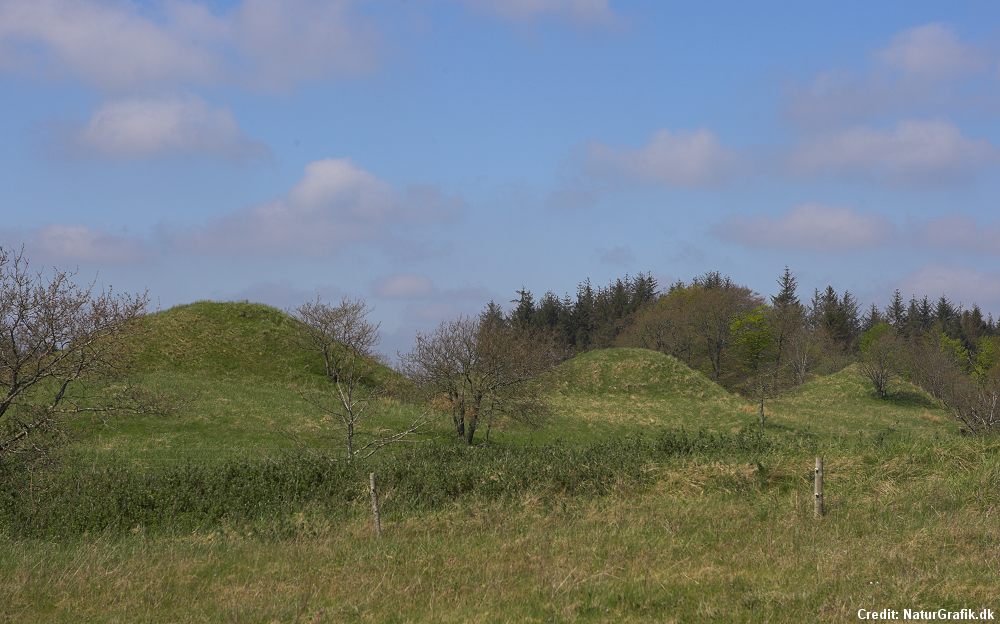
Burial mounds from the Bronze Age – artificial hills of earth and stones built over the remains of the dead. Vendsyssel, Jutland. Credit: NaturGrafik.dk.

No matter if you go by car, bicycle or hiking through the Danish countryside there is a good chance that you will pass by ancient tombs. You will find peat burial mounds from the early Bronze Age. They look like small hills – and you will propably also cross dolmens built of large granite blocks during the Stone Age.

Dolmens of stone (3500-3200 BC)
The dolmens were built of large granite blocks. The oldest dolmen chambers are small and thought to have been for single burials. Later the dolmen chambers became larger and an entrance was added, so they could be used for several burials. The dolmen chambers were covered with an oblong or round mound. The weather has often taken its toll on the dolmens, so that the mound itself has usually been eroded away. This leaves only the characteristic burial chambers, which were originally covered. 2300 dolmens are preserved in Denmark, only a tenth of the original number.

Peat burial mounds from the Bronze Age (1500-1200 BC)
Several burial mounds were built in the Early Bronze Age. In the burial mounds the elite of the time were buried, dressed in clothes woven from wool and with fine gifts of bronze. The majestic Bronze Age mounds are often located on hills. In the period 1500-1200 BC, thousands of peat burial mounds were erected all over the country. No less than 86,000 burial mounds have been registered in Denmark, where the majority have been built within the three centuries of the Late Bronze Age.

Source: National Museum of Denmark, kongeaastien.dk

The Danish Wadden Sea – one of the world’s most valuable tidal areas

0

The Danish Wadden Sea is the most northern part of the Unesco World Heritage.

The Danish Wadden Sea has many particularities, making this region a true treasure chest of natural highlights, all waiting to be explored. There are many possibilities for you to explore on your own, or maybe to join the many guided tours.

Attracting millions of migratory birds.
The Wadden Sea is of particular importance because it is one of the world’s most valuable tidal areas, being located in the middle of the Eastern Atlantic migratory routes. It attracts between 10-12 million migratory birds each year that use the coastline as their stopover and wintering area in northern Europe.

Watching seals.
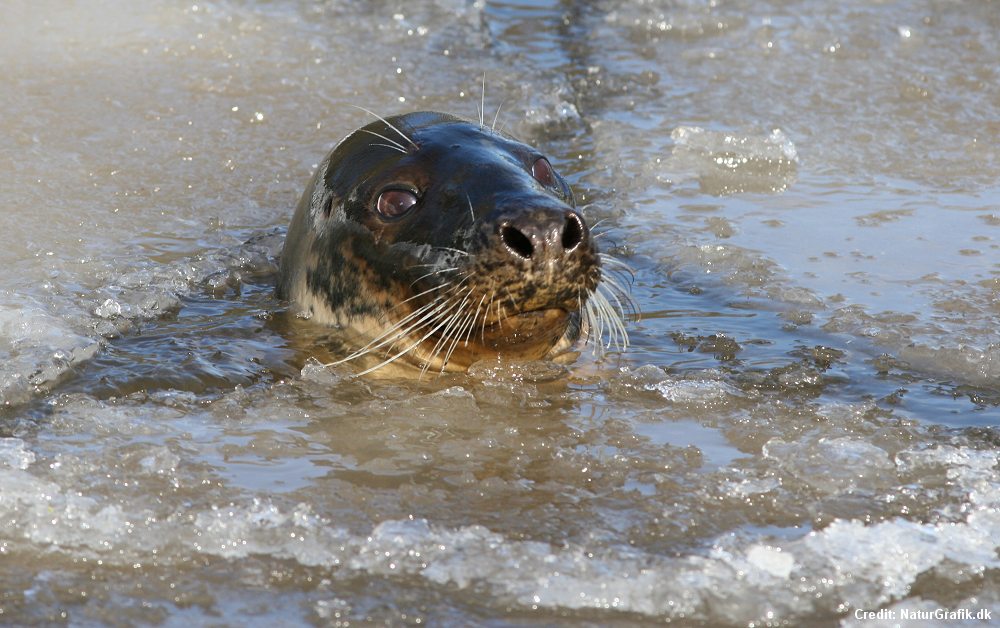
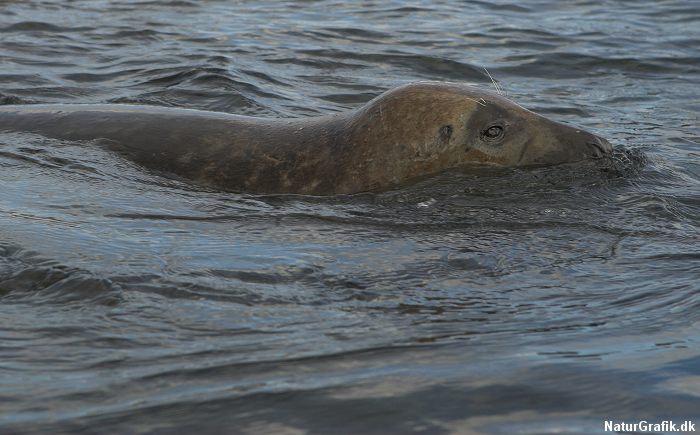
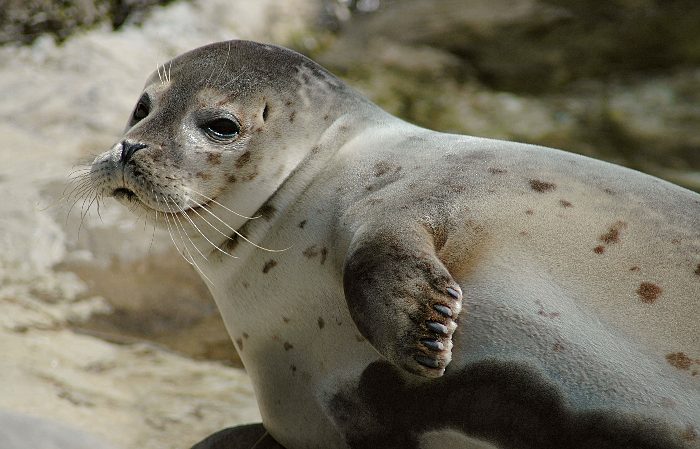
In addition to the birdlife, this vast wetland area with its miles of precious beaches is home to Denmark’s largest population of harbour seals (Phoca vitulina), with sightings throughout the summer months being virtually guaranteed. Sometimes you will also see the big Grey Seal (Halichoerus grypus, meaning “hooked-nosed sea pig”). The Grey Seal is the biggest land breeding mammal in Denmark and also considered the largest predator on land (along the beaches) in Denmark. The Grey Seal can sometimes prey and feed on large animals like harbour seals. It has also been blamed for a spate of mysterious mutilations of harbour porpoises in the North Sea.

Go for a walk on the sea bed.
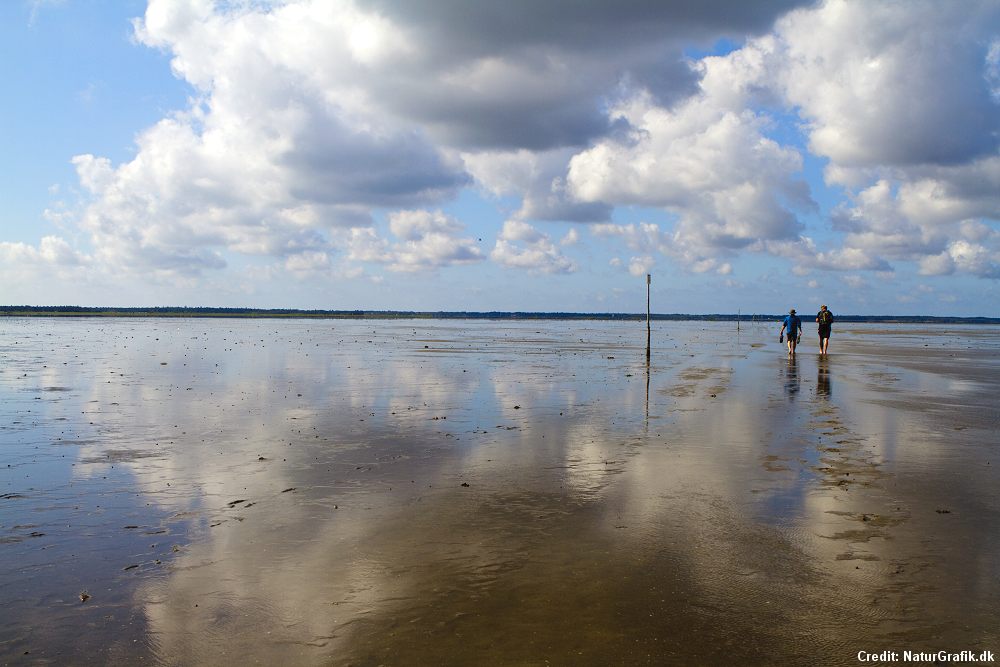
No recreational activity is more characteristic for the Wadden Sea region than taking a walk on the flat side. Reveal what is at the bottom of the Wadden Sea by taking a walking tour. Twice a day – in the hours around low tide, the Wadden Sea gets dry and you have the chance to actually get there and experience how it feels like to stroll on the sea bed.
However, be aware of the tide! Please, remember the fact that some 6 hours later high tide brings the water back. You must be safe ashore before then!

The Wadden Sea is the largest, flattest and wettest National Park in Denmark. The area was appointed the status of National Park in 2010.

Sources: waddensea-worldheritage.org, vadehavscentret.dk, Visitdenmark.dk

Please, keep your dog on a leash

On beaches from 1 October until 31 March you are permitted to take your dog off its leash – provided that you keep it under absolute control. During summer season dogs must always be kept on a leash. Credit: NaturGrafik.dk

Dogs must be on a leash when you are visiting forests and nature areas according to Denmark’s Protection of Nature Act.

A visit to the countryside should be enjoyable and trouble-free for you and your dog. However, please remember that dog owners are responsible for controlling their dogs’ behaviour in public. By law, you must control your dog so that it does not disturb or scare farm animals or wildlife. Dogs must basically always be on a leash when you are visiting forests and nature areas according to Denmark’s Protection of Nature Act.

Avoid taking you dog into fenced nature areas with farm animals

It is best to avoid encounter livestock. If a farm animal chases you and your dog, it is safer to let your dog off the lead – don’t risk getting hurt by trying to protect it.

It is best to avoid encounter livestock. Credit: NaturGrafik.dk

Beaches

On beaches from 1 October until 31 March you are permitted to take your dog off its leash – provided that you keep it under absolute control. During summer season from 1 April until 30 September dogs must be kept on a lead. The fine for not having your dog on a lead is 2000 DKK (270 EUR). Please notice, on some beaches dogs are total banned. You should therefore always read the local signage carefully.

Why must my dog be kept on a lead?

Many children and adults are afraid of dogs, and these people also have the right to feel safe in the countryside and at the beaches. They have no way of knowing that your dog would never do them any harm.
Besides dogs allowed to run free can frighten and cause distress to wild animals in the countryside. The smell of a dog means that it can take some time before some animals dare to return to their pastures or young. Dogs off their leads can start to roam, and there have been instances of roaming dogs that have mauled wild animals.

Who enforces the law?

In public nature areas including the beaches, it is normally government officials like forest officers or rangers who enforces the law. In urban areas it is always the Police.

Remember that the basic rules still apply even if where there are no signs.

Source: The Nature Agency, VisitNature.com, NaturGuide.dk

Danish butterflies in decline

Denmark’s butterflies have undergone an accelerating negative trend since the mid-twentieth century.

Within just fifty years, a total of twelve species – corresponding to approximately 10% of the overall number of Danish butterfly species – have disappeared from the Danish countryside.
The reasons for the enormous decline in the species of Danish butterflies are mainly found in the intensification of forestry and agriculture, which has resulted in limited space in the modern landscape for wildernesses and butterflies. Today there is about 65 species of day-active butterflies with permanent populations in Denmark.

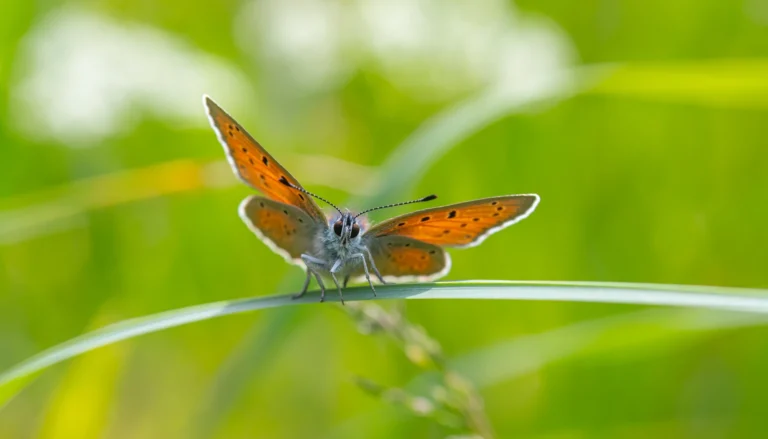
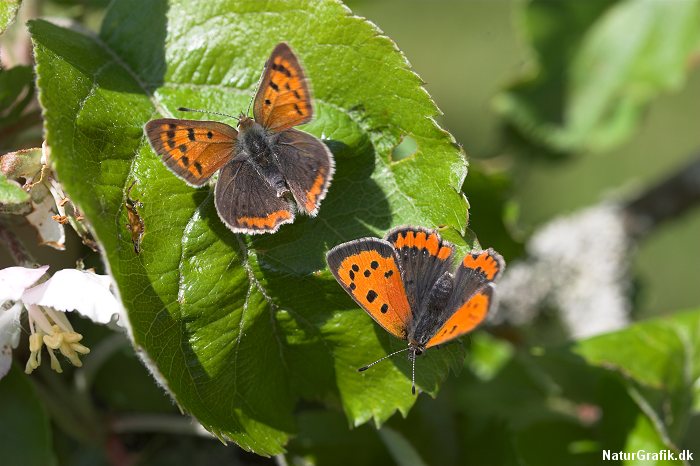
12 common Danish butterflies
During a summer holiday in Denmark you will still see many different butterflies. Her are 12 common species:

Coverage of the decline of the Danish butterflies was made possible by a new database that contains almost half a million butterfly observations from all over Denmark. The database contains historical data from collections at natural history museums and entomological societies, private collections, and more recent data from atlas studies and popular citizen science databases.

Lepidoptera-species of Denmark consist of both the butterflies and moths recorded in the country. There are a total of about 2,625 species of Lepidoptera in Denmark.

Sources: scitech.au.dk, Wikipedia.

The wolf is back in Denmark – two centuries after extermination.

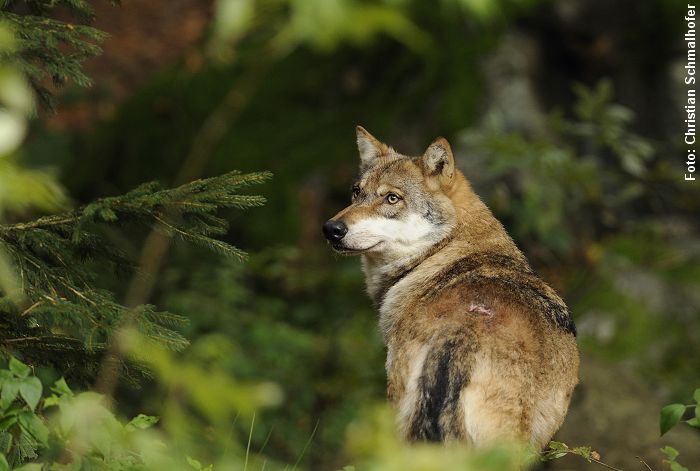
The wolf is back in Denmark. So far, a majority in the Danish population seem to welcome the wolf. Credit: Christian Schmalhofer, Dreamstime.com

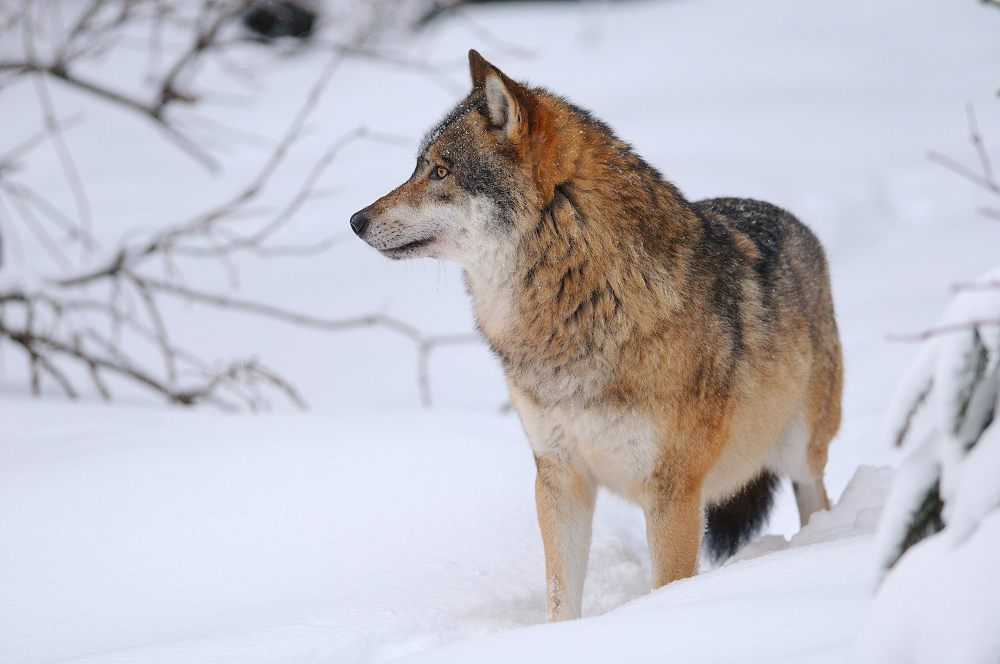
Wolves are again a part of Danish Nature and Wildlife.

There had been no sightings of wolves in the country the past two centuries until a male was found dead in a national park in Northwestern Jutland in 2012. Since then single wolves have been spotted wandering in Jutland, Denmark’s peninsula bordering Germany.

The gray wolf originally was found throughout the northern hemisphere in every habitat where large ungulates were found. From mid-Mexico and India to the North Pole, the wolf roamed areas as diverse as Israel and Greenland. As human settlements encroached on wolf habitat, encounters with wolves increased, especially with livestock. Firearms, poisons and traps were developed and used ruthlessly against wolves. In Denmark the last wolf was shot in 1813.

The Danes and the Wolf
So far, a majority in the Danish population seem to welcome the wolf.
Some people, especially in the areas where the wolves have been seen, say they are afraid that the wolf will approach their houses and snatch their children.

Recent sightings of wolves in Jutland have Danish farmers worried about the safety of their livestock. However, domestics dogs seem to be a bigger problem when it comes to attack on sheeps.
Since 1974, Europe has not experienced a single prepatory wolf attack on humans.

Sources: rewildingeurope.com, netnatur.dk, revitalizationnews.com, The fear of wolves: A review of wolf attacks on humans.

Denmark’s most poisonous mushroom.

“…Even the ingestion of half a sponge can have fatal consequences”

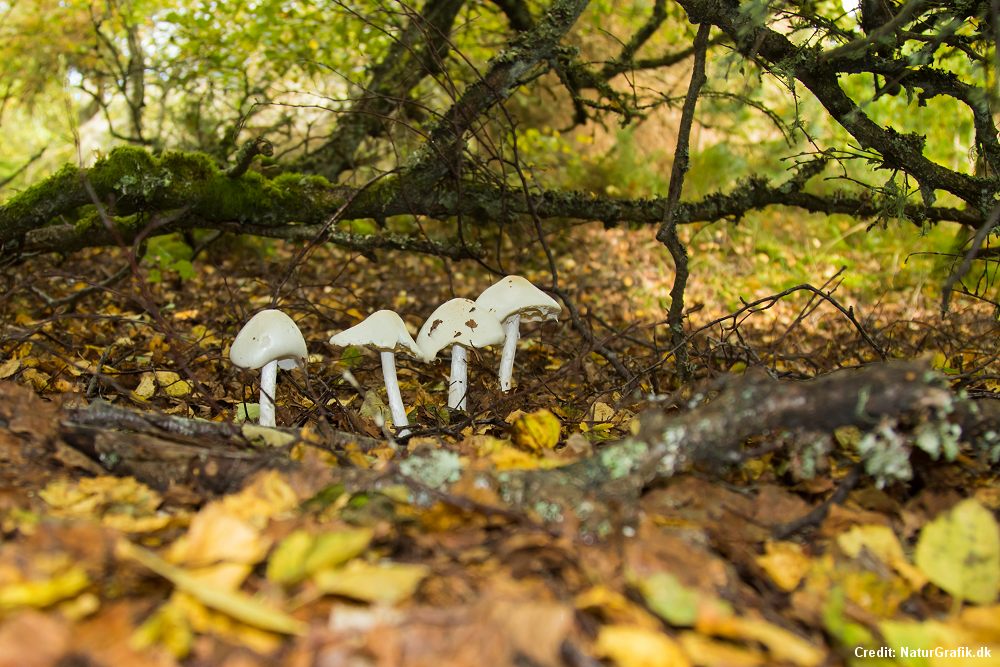
Destroying angel (Amanita virosa) is considered one of Denmark’s most toxic fungus. Deadly poisonous! Destroying angel can be found in mixed broadleaf and birch woodland. Credit: NaturGrafik.dk

As it stands in the woods with its clean, snowy color, it looks like innocence itself. The snow-white mushroom Amanita virosa is in English known as the “Destroying Angel”.
The name is very appealing because one should not be fooled by the innocent appearance of the fungus. Amanita virosa is considered one of Denmark’s most toxic fungus. Deadly poisonous!
Some of the most creepy of this mildly “Angel” is that poisoning symptoms often only appear many hours later. And here it may well be too late where liver and kidneys have taken irreparable damage. Even the ingestion of half a sponge can have fatal consequences.

Confusion with edible Agaricus mushrooms
The Destroying Angel has been the cause of many deaths in Europe – including Scandinavia.
Anyone gathering mushrooms to cook and eat needs to be able to identify this poisonous amanita fungus and to distinguish between a young Destroying Angel and an edible Agaricus mushroom.

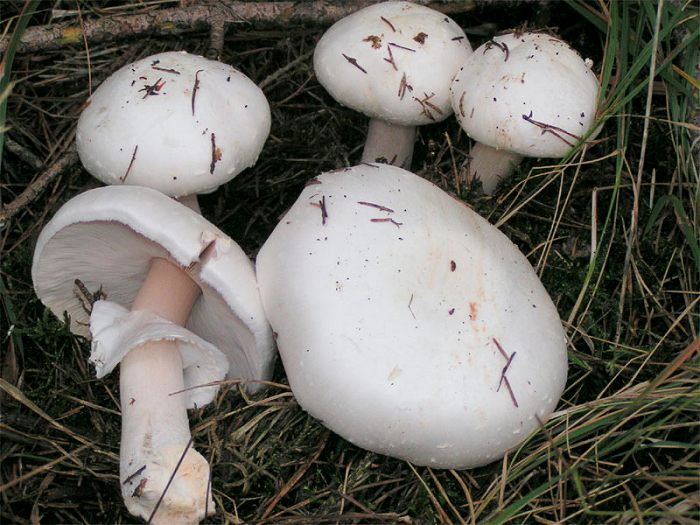
Amanita virosa can be confused in its very young stage with the attractive edible Agaricus mushrooms. However, edible Agaricus mushrooms have colored slats (from pink to brown), where the Destroying Angel has white slats.

Amanita virosa, The Destroying Angle,. Credit: Eric Steinert, CC BY-SA 3.0, Wikipedia.

For good reasons, you should never eat fungi where there is only the slightest doubt about the identification and determination.

Sources: VisitNature.com, first-nature.com. Featured image: Credit: Miika Silfverberg, CC BY-SA 2.0, Wikipedia.
Go for a swim – without wearing swimwear?

In general, the beaches along Denmark’s about 8,000 km of coastline are clothing-optional.

Is it legal to go for a swim – without wearing swimwear?

“Denmark – the most shameless nation on the planet” according to a survey once conducted by the University of Zürich.
In 1969, Denmark became the first country in the world to legalize pornography. Nudity is not new to Danes and maybe that is why the Danes not are afraid of nudism. Although it is only practiced by few.
Scandinavia including Denmark is probably the most open-minded region in the world. It is legal in Denmark for nudists to swim naked, or to sunbathe either topless or completely in the nude.

In general, the beaches along Denmark’s about 8,000 km of coastline are clothing-optional. Should it be prohibited as an exception, a sign will let you know. Nudism at the beaches is accepted and widespread in Denmark, however the majority of the Danes are using swimwear.

It is widely accepted to swim without swimwear – especially if you show consideration for the sensibilities of other users by keeping a reasonable distance. Credit: Dreamstime.com

Note that if a beach is not a dedicated Danish nudist beach, anyone without clothing has a certain obligation to show consideration for the sensibilities of other users by keeping a reasonable distance from them.

I you want to go for a fresh up in the lake or the sea – after a long day hiking – just go for it! With – or without your swimwear if you do not want to bother with wet clothes.
If you are a bit shy it is not that difficult to find remote beaches with no or few people.

Source: NaturMagasinet.dk – The Danish Nature and Outdoor Magazine.

The Cliffs of Møn

0
Møns Klint (the Cliffs of Møn) is a 6-7 km stretch of chalk cliffs along the eastern coast of the Danish island of Møn in the Baltic Sea. Credit: Bob Collowan/Commons/CC-BY-SA-4.0

The Cliffs of Møn are a 6-7 km stretch of chalk cliffs along the eastern coast of the Danish island of Møn in the Baltic Sea.

Some of the cliffs fall a sheer 120 m to the sea below. The chalk forming the cliffs consists of the remains of shells from millions of microscopic creatures (coccolithophores) which lived on the seabed over 70 million years ago.

The area around Møns Klint consists of woodlands, pastures, ponds and steep hills, including Aborrebjerg which, with a height of 143 m, is one of the highest points in Denmark. The cliffs and adjacent park are now protected as a nature reserve.
Because of the special nature of the chalky soil, there are many rare plants in the area, particularly several varieties of orchid which are at their best in early summer.
There are clearly marked paths for walkers, riders and cyclists. The path along the cliff tops leads to steps down to the shore in several locations.

In the recent years, the peregrine falcon, the World’s fastest birds, has been breeding at the steep cliffs.

Sources: moensklint.dk, Wikipedia.

Organic Denmark

0


Almost 10 per cent of all foods sold in Denmark are organically cultivated, which is a world record.

The Danish consumers are the most pro-organic consumers in the world. In fact Denmark has the world’s highest organic share and the most well-developed organic market.
Denmark was the first country in the world to introduce an organic logo that guarantees control by national authorities.

The Danish organic logo is also given to cafees and restaurants that serve organic meals. One of the strongest selling points for eating organic foods had been to reduce our exposure to pesticides and insecticides. Besides in some agriculture areas, pollution of groundwater courses with synthetic fertilizers and pesticides can be a major problem.

Organic farming also helps preserve more natural habitat areas and encourages a more healthy biodiversity.
Read more at organicdenmark.com

Sources: Ministry of Environment and Food in Denmark, organicdenmark.com.

The migrating sand dunes of Råbjerg Mile

0
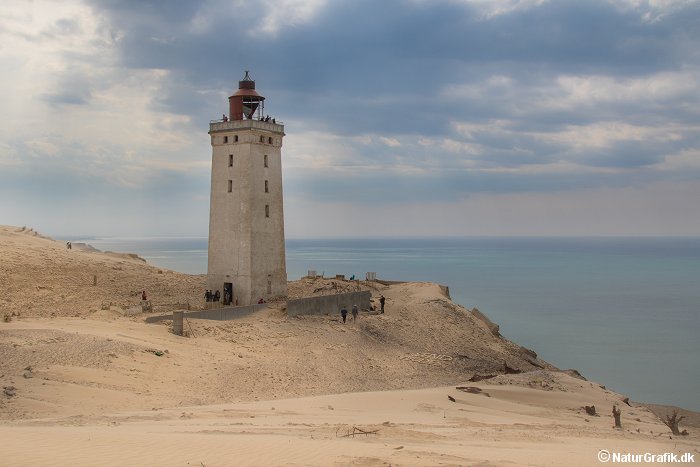
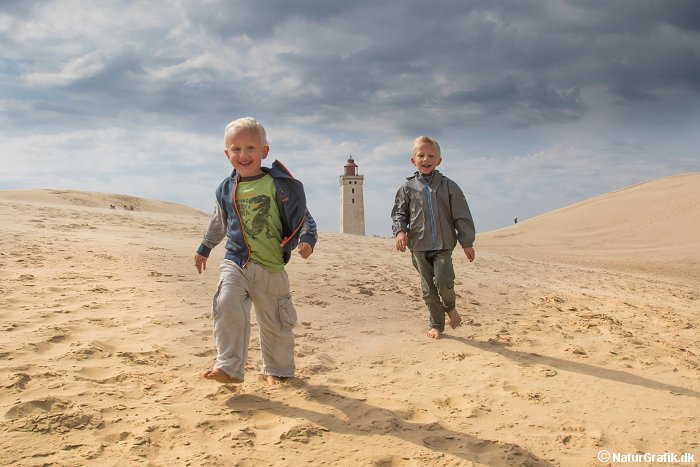
Råbjerg Mile. In front: Remains of settlements from the time before the migrating sand dunes buried builings.

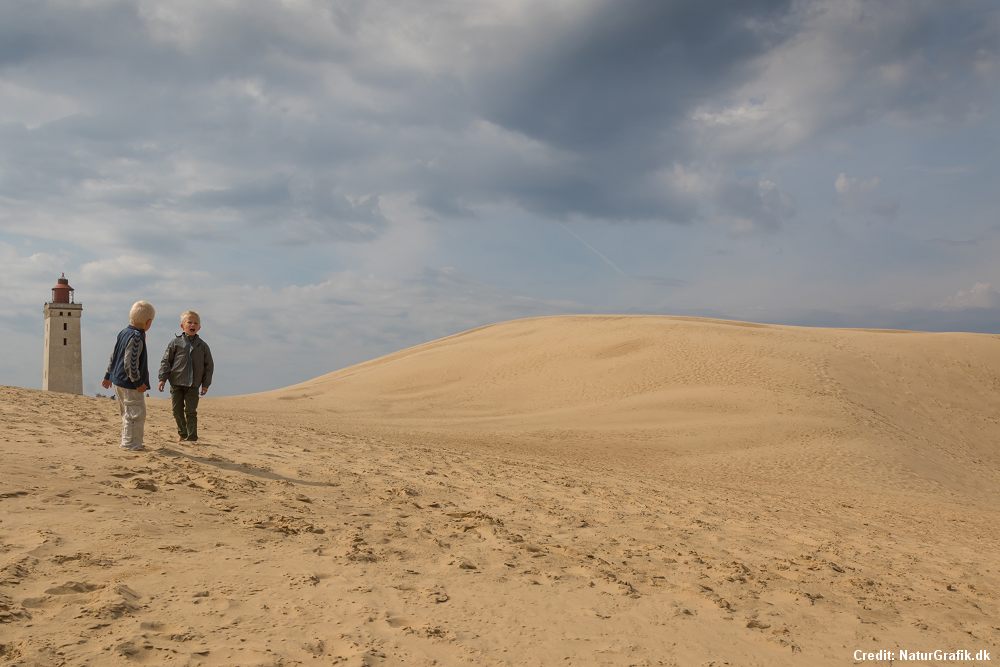
South of Skagen, you will find one of the largest migrating sand dunes in Europe.
Rabjerg Mile’s documented history begins in the 1700s. By then Denmark had been plagued for centuries by sand drifts that destroyed farmlands, buried buildings and forced villages to be abandoned.

“It is to be feared that the whole of North Jutland will be covered with sand and virtually laid waste,” a city official in Aalborg wrote in 1726.
In northern Jutland in the 16th and 17th centuries shifting dunes were a problem for the population: huge dunes, some stretching up to 7 km (4 mi) inland, drove them back from the coastal areas, but in the 19th century the Danish government acted to alleviate the problem.

Råbjerg Mile is Northern Europe’s largest migrating dune.

The Sand Drift Act of 1857 allowed the state to buy or expropriate areas of sand drift, and a further Act in 1857 allowed the purchase of areas adjacent to the drifts. Dune grasses and conifers were planted to stabilize the sands and these plantations became common after 1880.

While the majority of dunes were stabilised by planting, the Råbjerg Mile was left to allow future generations to understand the problem of sand dune drift.
The wind moves it in a north-easterly direction up to 18 metres (59 ft) a year. The dune leaves a low, moist layer of sand behind it, trailing back westwards towards the sea, where the Mile originally formed more than 300 years ago.

Source: Wikipedia, CNN.