


Home Blog Page 8

Watching birds in Denmark

0

Denmark can offer a wealth of birdlife at all seasons.

Denmark lies on the main migration routes between continental Europe and the rest of Scandinavia. In spring and autumn, a massive migration of landbirds – both raptors and passerines – takes place, while enormous numbers of wildfowl and waders stop off, some of them even spending winter here.

The total list of birds of Denmark includes more than 500 species. About 200 species are breeding in Denmark.
In the northernmost part of Jutland is Skagen. Skagen acts as a bottleneck and is probably Northern Europe’s best spring migration point for birds of prey. Migration here starts in April and ends in mid June.

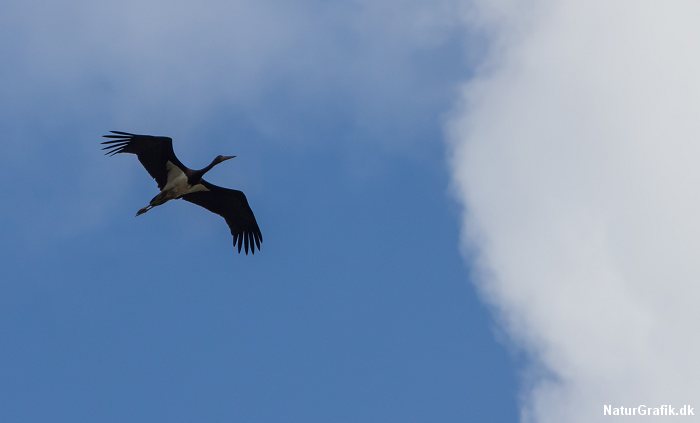
Black stork at Skagen.
A migrating black stork in the sky above Skagen in May.

Birdsites and access

In Denmark there are many great bird watching sites. Learn more about birding sites in Denmark. In Denmark there is in general free access to forests, beaches and uncultivated land like heaths, bogs and marshes provided you can enter the areas legally. Forcing one’s way through private gardens or farmed fields is not allowed. In public forests it is normally allowed to walk everywhere anytime. In private woods you are only allowed to walk or cycle along roads and pathways during daytime without a permission from the owner.

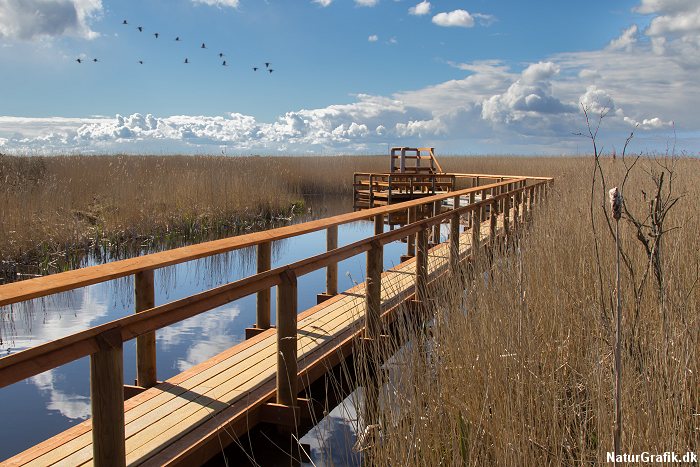
Boardwalks at Vejlerne Nature Reserve.
Vejlerne Nature Reserve, Denmark’s largest scientific reserve. One of the most important bird sanctuaries in Northern Europe.

Vejlerne nature reserve is located in Northern Jutland, Denmark. The nature reserve covers an area of about 60 km² – meadows, reed beds, and lakes – and is one of the most important bird sanctuaries in Northern Europe. Around the reserve you will find several bird observation towers.

Sources: fatbirder.com, dof.dk. Featured image at top: © Wavebreakmedia Ltd | Dreamstime.com.

Making a camp fire at the beach?

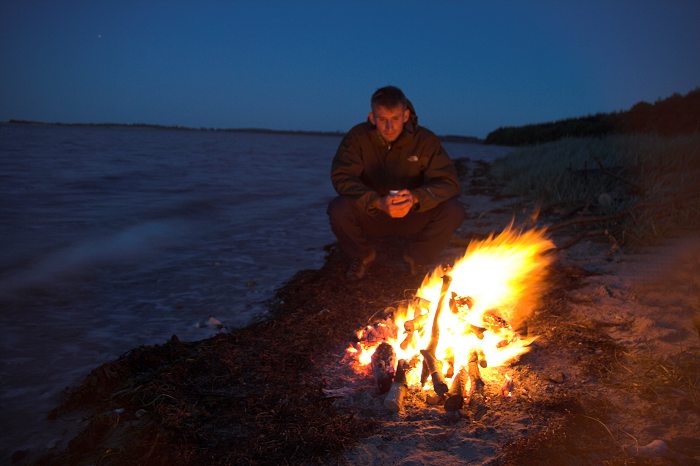
Camp fire at the beach? It is okay but keep it small.

Public rights on the foreshore and in tidal waters have a long history and tradition in Denmark. These rights have not been fully defined but include shooting wildfowl, fishing for sea fish, gathering some uncultivated shellfish, lighting fires, swimming, playing on the sand and picnicking.

Camp fires are only allowed in the part of the beach where there is no vegetation.
Regarding lighting fires at the beaches, it is only allowed in the part of the beach where there is no vegetation. Normally the land between the high-water mark and the low water mark.

If you do wish to light an open fire, keep it small, under control and supervised. Fires that get out of control can cause major damage, for which you might be liable. Also, if your fireplace can be mistaken by other people for an uncontrolled fire – they might alarm the Fire Department and you will might be held liable.

Do not cover the fire with sand when you leave it. The embers can stay warm for a long time and maybe cause burn injuries if someone steps into it. Use water instead!

Source: The Danish Environmental Protection Agency, mst.dk.

Can I stay overnight at the public beaches?

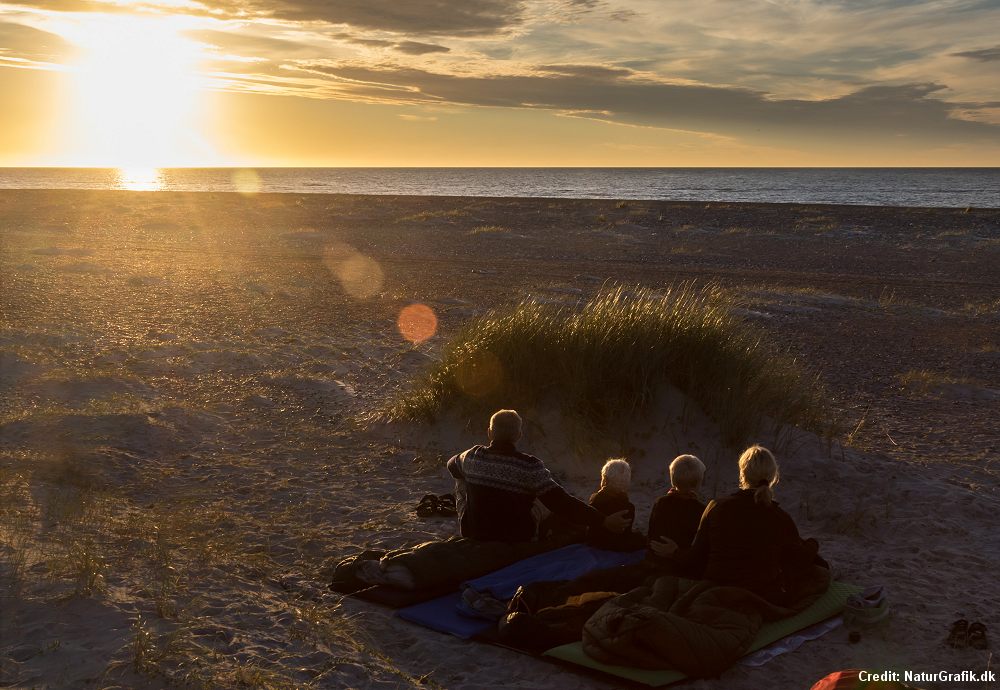
A Danish family sleeping on the beach for a night. The outdoor trend has become more popular in recent years. Tents are not allowed at the public beaches meaning you can spend the whole night looking up at the stars.

Is it okay to sleep for the night at the public beaches?

Well, if the weather is fine you can! However, campers and tents are not allowed. It is okay to grab your sleeping bag and face the stars for a night. To prevent permanent camps you can only stay for one night at the same place.

Source: The Danish Environmental Protection Agency, mst.dk.

Denmark wants to be independent of fossil fuels.

0


Green Energy

Sustainable economic growth and security of energy and water supply are among the greatest global challenges today. As the first country in the world, Denmark has decided to lead the transition and become a green and resource efficient economy entirely independent of fossil fuels by 2050.

Today, more than 40 per cent of Denmark’s energy supply comes from wind power and the plan is to reach 50 per cent by 2020, as set out in the 2012 Energy Act. In 2050, the plan is for Denmark to be 100 per cent free of fossil fuel and wind energy will make up a very large part of the energy mix by then.

The dark side of the windmills success is that many Danes think that the increasing number of wind farms are ruining the landscape. Remote countrysides with endless horizons (appealing to many tourists) are today broken many places by windfarms. In addition, the windmills seem to become higher and higher – with increasing impact on the scenery.
Furthermore several Danish scientists have documented that the wind farms also can have an negative influence on wildlife like bats and some migrating birds.

Sources: stateofgreen.com, Denmark.dk.

Bulbjerg – the bird cliff of Jutland

0
Bulbjerg is a limestone cliff in Northern Jutland.

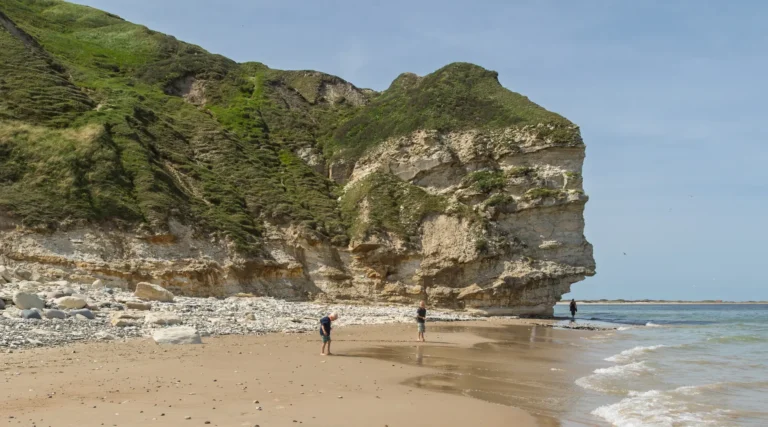
Bulbjerg is a protected nature area, and a beautiful place to visit.

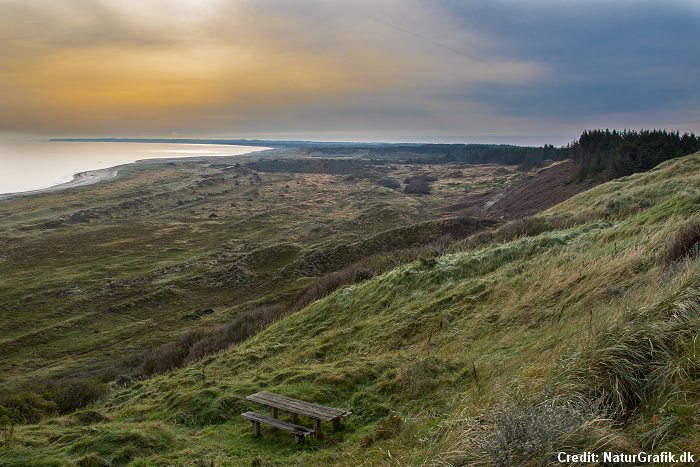
Bulbjerg is a limestone cliff in northern Jutland, Denmark, facing the sea of Skagerrak. It is the only rock formation in Jutland and the only bird cliff on the Danish mainland, and as such the only breeding place of the black-legged kittiwake on the Danish mainland.
The limestone cliff is 47 meters high and provide a magnificent view over the sea and the coastal land.

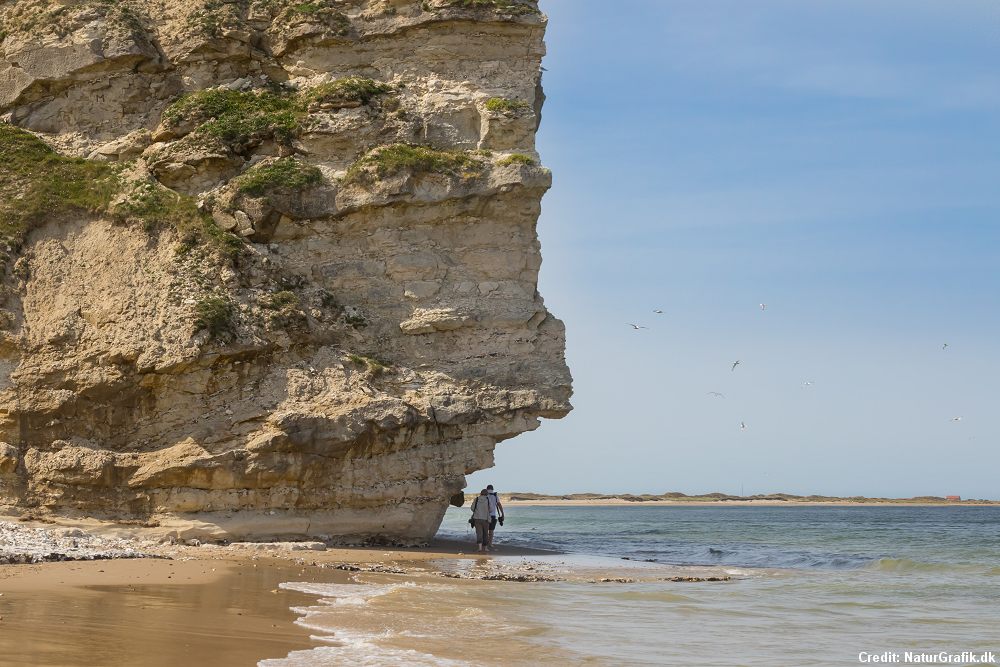
View from Bulbjerg. Credit: NaturGrafik.dk

In the plantations, forest and open areas around Bulbjerg, there is a opportunity to see red deer and roe deer – the best chance is early morning and at dusk. The forest here are pointed out as one of the best Danish habitats for wolves. However, only a single migrating wolf is recorded during the latest years.

Many rare species of plants are found here including the endemic Eyebright flower (Euphrasia dunensis) and some rare Orchids.

Sources: visitthy.dk, visitnature.com, wikipedia.

Be aware of ticks

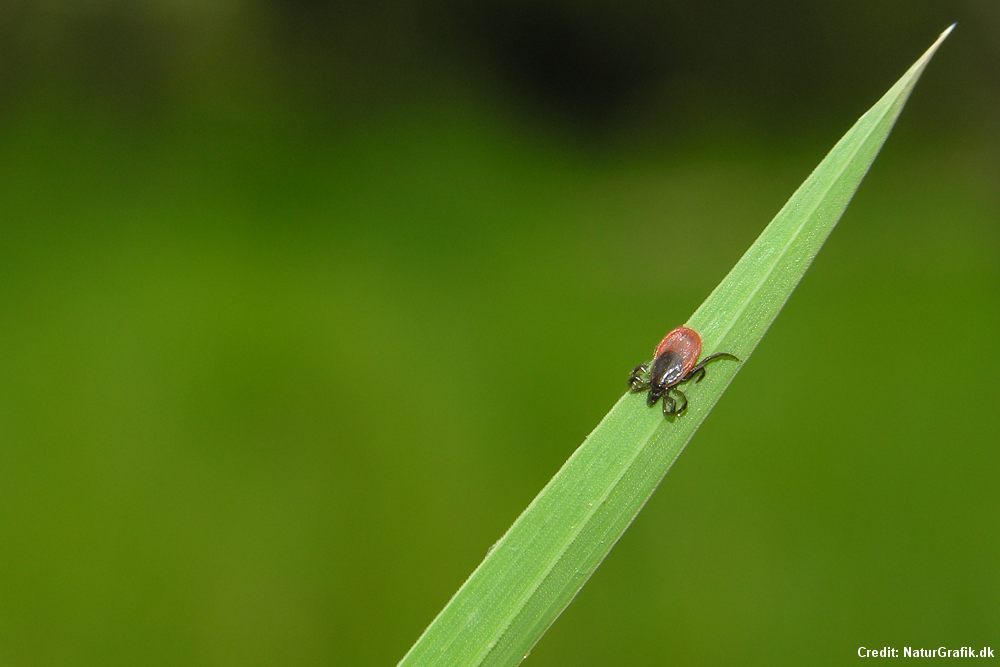
Ticks are common during summer time in Denmark. Credit: NaturGrafik.dk

How to take precautions against ticks and Lyme disease.

The castor bean tick is found across Europe including Denmark. It may reach a length of 11 mm (0.43 in) when engorged with a blood meal, and can transmit both bacterial and viral pathogens such as the causative agents of Lyme disease and tick-borne encephalitis.

Only a very small proportion of ticks carry Lyme disease, and not all infections are severe, but it makes sense to avoid them in the first place.

Be aware of the likely presence of ticks in long grass and bracken, especially on warm, windless, humid days. Ticks are most active between April and October.

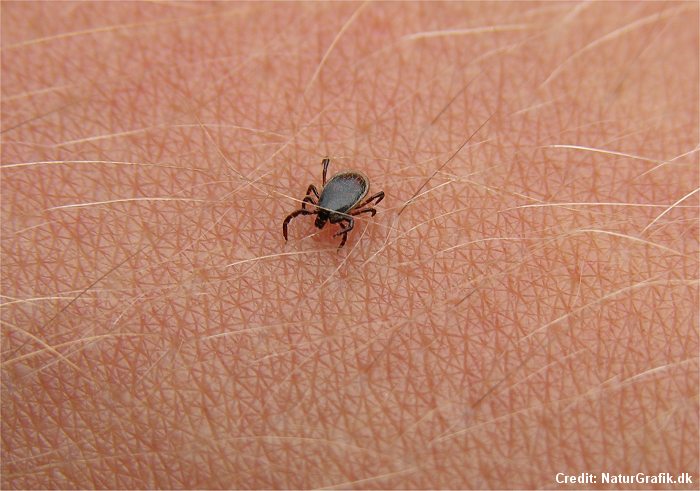
A tick crawling on an arm. Credit: NaturGrafik.dk

Use an effective insect repellent. Tuck trousers into socks, and wear light clothing, so that ticks can be spotted easily.

The most important thing is for those that think they might have symptoms of Lyme disease to go to the GP as prompt treatment will prevent complications. Symptoms usually take between a few days to six weeks to appear after a tick bite.

Source: Wikipedia.

Denmark has become a bit wilder

Golden Jackals (Canis aureus) have been seen in Denmark for the first time ever and are now considered a new species in the country. The animals are crossing from the German border into Denmark. Credit: Prabukumar84, CC-BY 4.0., Wikipedia.

Danish nature has become wilder and more exciting in recent years.

Large nature restoration projects have succeeded with support from private foundations. New species invade and returns to Denmark.
Denmark is seemingly becoming a wilder by the day. Wolves have returned after a long absence, the European jackal has made its first ever appearance, the Golden Eagle is breeding again. Wild boars have returned in parts of the country and wild beavers have been spotted north of the Lim Fjord, Northern Denmark for the first time in 1,000 years.

The Whitetailed Eagle is now to be find in most parts of Denmark. In 1996, the white-tailed eagle re-colonised back to Denmark and the population has been growing ever since.

White-tailed eagle
White-tailed eagle.

The white-tailed eagle is North Europe’s largest bird of prey. With its impressive wingspan of up to 2.5 m, and the very square flight silhouette, it rather resembles a flying door. Adult sea eagles can also be recognised by the white tail, the bright head and yellow beak.

In Denmark, the white-tailed eagles breed at large lakes and fjords. The population is increasing, with most breeding pairs found on Lolland, South Sealand, Funen and Jutland.

Sources: dof.dk, thelocal.dk, kongeaastien.dk.

The Red Stag – Denmarks largest land-mammal.

There is a good chance to see reed deers in the wild in Denmark. Credit: Dalia Kvedaraite, Dreamstime.com

Facing Denmarks largest land-mammal.

The red deer is the largest land-mammal in Denmark. The red deer (Cervus elaphus) population in Denmark became almost extinct in recent historical times due to over-hunting. The species has subsequently recovered within remote areas, but non-Danish individuals have been introduced at several localities. However, the current population of red deer in Denmark is genetically very close to the original Danish red deer.

The population of red deer in Denmark has grown dramatically in recent years. There is a good chance to see reed deers in the wild in Denmark. Especially in the remote areas in Western Jutland near the plantations and coastal moorlands. The largest herd of red deer ever seen in Denmark has been counted in a field in western Jutland. Over 1,000 deer are roaming near Vind Hede just southwest of Holstebro.

Appearance
The summer coat is reddish brown to brown and the winter coat is brown to grey. There are no spots on the adult coat. Stags have large, highly branched antlers and the number of branches increases with age.

Red deer graze on grasses and dwarf shrubs e.g. heather and bilberry. Woody browse, e.g. tree shoots, is taken when other food is limited during winter. However, grazing of tree shoots and agricultural crops puts red deer in conflict with farmers and foresters due to economic damage.
The breeding season, on rut, occurs in Denmark from the end of September to late October. Stags return to the hind’s home range and compete for them by engaging in elaborate displays of dominance including roaring, parallel walks and fighting.

Stags roar and grunt during the rut. Hinds bark when alarmed and moo when searching for their young. Calves emit a high-pitched squeal when alarmed and may bleat to their mother.

Dyrehaven – The Royal Hunting Ground And Park.
It is not always easy to spot red deers in the wild. In Denmark you will also find large parks with deers. Probably the moust famous is “Dyrehaven” just North of Copenhagen in Klampenborg. Dyrehaven is a Royal hunting ground and today a popular recreational area for activities like picnics and animal watching. Dyrehaven, which literally means “the deer park”, is a natural resort filled with lush forests, small lakes and wide, open landscapes. As the name might reveal, Dyrehaven is renowned for the more than 2000 free range deer that inhabit the park.

Dyrehaven is a beautiful mixture of grassy areas and forest. It was King Frederik III who in 1669 decided to fence in an area North of Copenhagen with rolling hills and woods, have a lot of deer driven into the area and make it a royal hunting ground for the next almost 100 years until Dyrehaven was opened to the general public in 1756. Wildlife photographers from all over Europe are visiting Dyrehaven every year in late September to get great pictures of roaring and fighting red stags.

Sources: bds.org.uk, copenhagenpictures.dk, Visitcopenhagen.com, researchgate.net. Feature image: credit: Dalia Kvedaraite, Dreamstime.com