



The Stork: From newborn symbol to returning wildlife icon.
Visitors travelling through the Danish countryside may occasionally encounter an unexpected sight: a large artificial stork standing beside a road, at a garden gate or outside a farmhouse. Look closely and it may be carrying a blue or pink ribbon.
This is not a warning about unusually large birds. It is a traditional Danish way of announcing a birth. A blue ribbon celebrates the arrival of a boy, while a pink one welcomes a girl. The custom reflects the old story that babies are delivered by storks – a tale once told to generations of Danish children and immortalised by Hans Christian Andersen in his fairy tale The Storks.
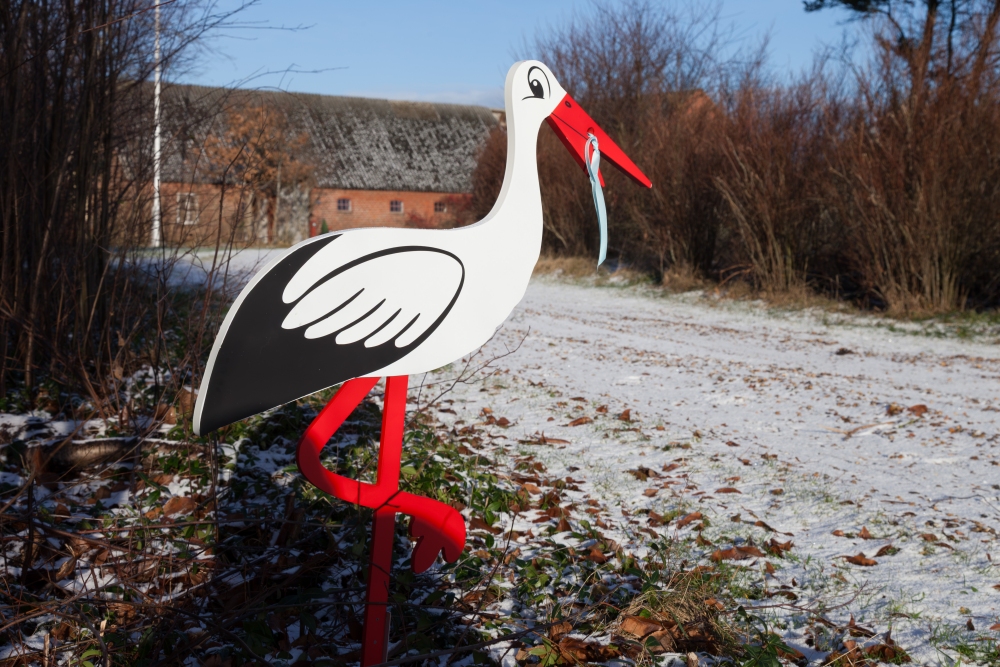
A bird of good news.
For centuries, the white stork (Ciconia ciconia) was a familiar neighbour in rural Denmark. Its enormous nests crowned farmhouses, chimneys and village buildings, while its return from Africa was welcomed as a sign of spring, much like the arrival of the swallows.
Living so visibly alongside people helped make the stork a symbol of home, family and good fortune. Its habit of returning to the same nesting place also suggested loyalty and domestic happiness. The connection with childbirth became especially enduring, and the roadside birth stork remains a cheerful echo of that folklore.
Similar customs are found in the Netherlands, Flanders and parts of Germany. In Denmark, however, the stork has acquired an additional meaning: it represents a rural landscape that has almost disappeared.
A symbol of the old countryside.
The white stork once thrived in a varied agricultural landscape of wet meadows, marshes, grazing livestock and hayfields. Here it could hunt frogs, insects, earthworms and small mammals in vegetation short enough to walk through.
As Danish farming became more intensive, wetlands were drained, grasslands were ploughed and mixed landscapes gave way to larger, more uniform fields. From thousands of breeding pairs around 1900, the population declined until the original Danish breeding population was declared extinct in 2008.
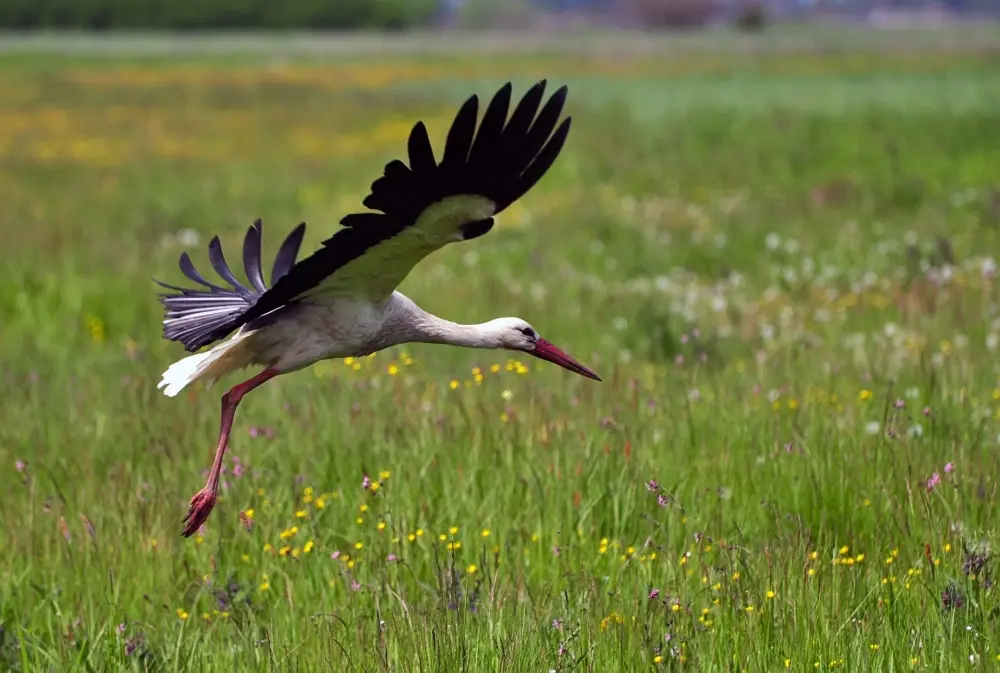
The stork consequently became an image not only of new life, but also of the old Danish cultural landscape – a countryside shaped by both nature and traditional farming.
The stork returns.
Today, there are cautious reasons for optimism. Restored wetlands, grazing projects, new ponds, nesting platforms and targeted conservation work are creating better conditions in parts of Denmark. In 2026, 13 breeding pairs raised 46 young – the highest number of fledglings recorded in the country since 1985.
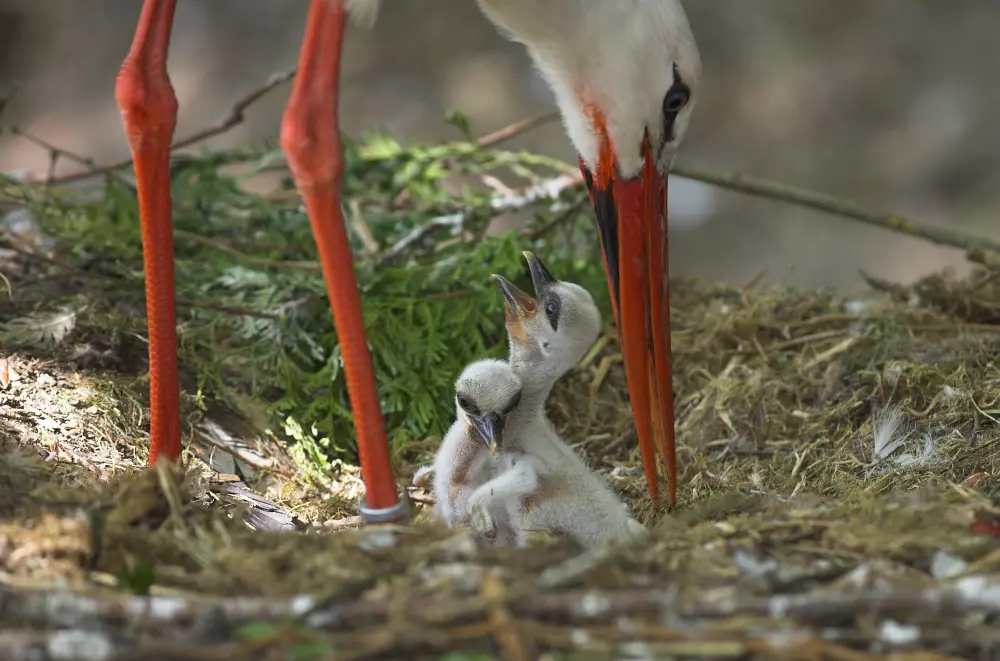
The population is still tiny and vulnerable, and wetlands alone are not sufficient. Storks also need open, grazed or mown landscapes where food is abundant and accessible. Nevertheless, their return shows what may be possible when nature is given more room.
For travellers, a real white stork circling above a meadow remains a rare sight. A wooden one beside the road is easier to find. Both, however, tell a distinctly Danish story – one about spring, newborn children, a changing countryside and the hope that an old and much-loved neighbour is finally coming home.