


Home Blog Page 6

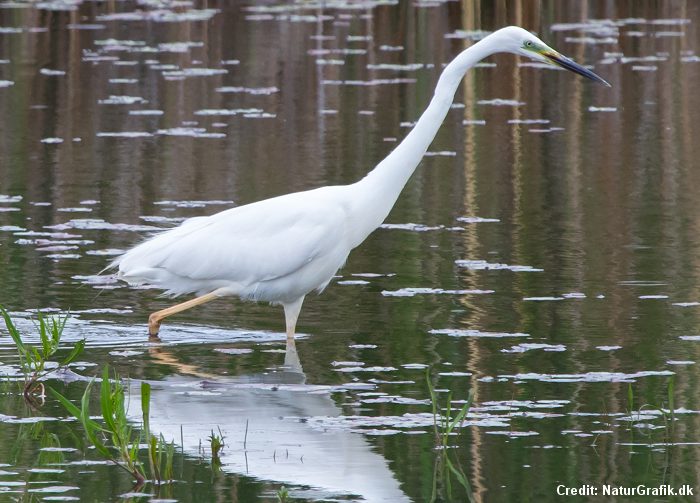
The great egrets have gone north and are now a new breeding species in Denmark.


The great white heron – a newcomer in Danish nature.

The great egret (Ardea alba), also known as the great white heron, is a large, world wide distributed egret, with four subspecies found in Asia, Africa, the Americas, and southern Europe.
The great egret is distributed across most of the tropical and warmer temperate regions of the world. The species breeds in colonies in trees close to large lakes with reed beds or other extensive wetlands.

Great egret.

First Danish colony of great egret.
Not so long ago the great egret was a rare sight in Denmark. However, in the recent few years the egrets have moved north. Climate change in the form of warmer weather is probably a part of the explanation. In 2017 a small colony of four pairs of herons establishing themselves in Vejlerne Nature Reserve in Northern Jutland. The first Danish colony of breeding great egrets ever.
In the years to come it is expected that the white heron will expand further and become a more common sight in the Danish nature.

Not to be found elsewhere in the world

The Jammer Bay (DA: Jammerbugten) also known as Mourning Bay probably because of many lost ships and shipwrecks in the past. Here grows a little and beautiful eyebright-flower. It is not to be found anywhere else in the world.

Small, beautiful – and endemic!

The coastal landscape and hinterland around Jammer Bay (Jammerbugten) in the northwestern part of Jutland contains an exciting and versatile wildlife, which in recent years has offered everything from red deers, otters, beavers and wandering wolves. The landscape houses several ornithological sights with Bulbjerg as Jutland’s only bird cliff – and Vejlerne Nature Reserve, where you will find several species of rare birds.
Botanically, the area is something very special and counts many rare plants. Some so rare that they are not found anywhere else in the country. For example this applies to a species of orchid (D. majalis subsp. calcifugiens).

The little and beautiful eyebright-flower.

The coastline between the cliff of Bulbjerg and the small fishing village of Thorupstrand is home to a little, beautiful eyebright-flower (Euphrasia dunensis), not noticed by many. This eyebright species is endemic, which means it only grows here! You will not find it anywhere else in the world!

Any dangerous spiders in Denmark?

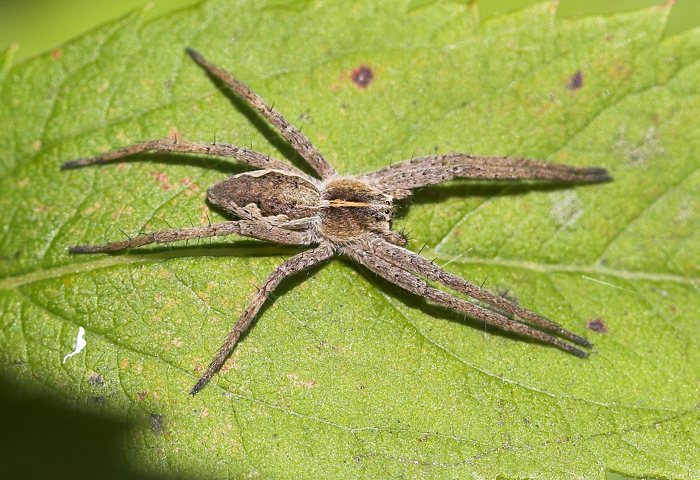
The very common – and harmless, nursery web spider, Pisaura mirabilis. Credit: Niels Lisborg.

More than 540 species of spiders have been recorded in Denmark. Fortunately, all of them are harmless to humans. However, some can bite you quite noticeably!

Actually there are quite a few Danish spiders which are able to bite you noticeably, according to the Danish Nature Magazine. However, all of them are considered harmless to humans. In the worst cases the bite can feel like a sting from a bee. Furthermore, you almost must squeeze the spider to make it bite you!
So don’t worry. 99.9% of the Danes have never been bitten by a spider – and, for the most part, do not even know that some spiders are able to bite.

According to an old Danish saying you must not kill a house spider. It will bring you luck!

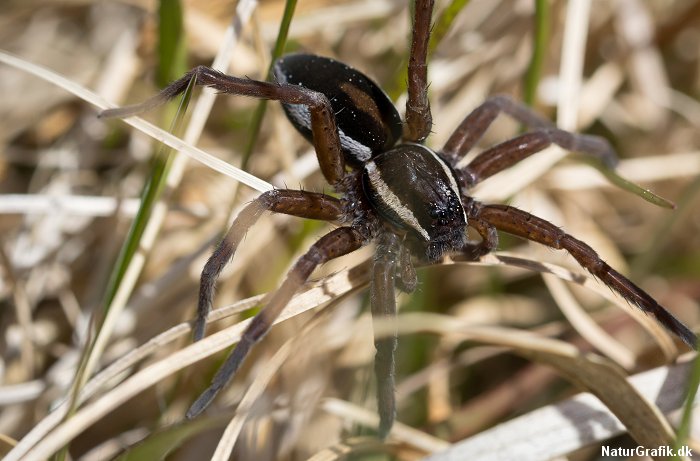
Raft spider
The raft spider, Dolomedes fimbriatus, can and will bite if mis-handled. The bite can be painful like a sting from a wasp but it is not dangerous. Credit: Niels Lisborg.

Spiders are an important factor in our ecosystem. Did you know that spiders worldwide eat an estimated 400 to 800 million metric tons of insects every year.
For comparison, the entire human population consumes about 400 million tons of meat and fish every year.

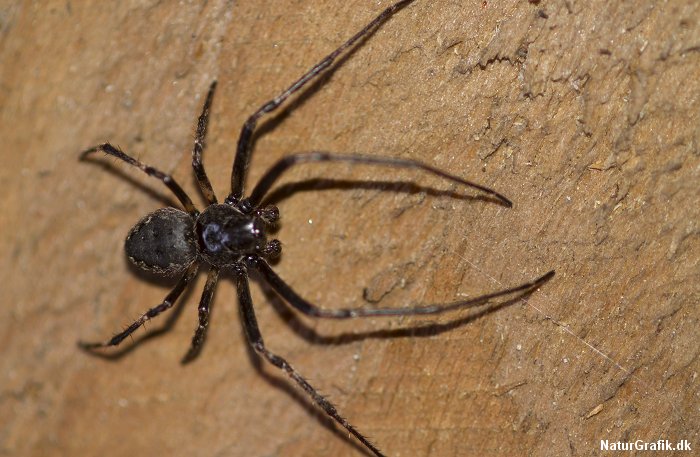
Orb-weaver Spider (Nuctenea umbratica)
The orb-weaver spider (Nuctenea umbratica) is also known to be able to bite humans. Like all other Danish spiders it is not dangerous to humans. Credit: Niels Lisborg.

More species in the future…
More and more spiders species native to southern Europe are making their way north to Denmark because of warmer temperatures. Many Danish biologists believe that climate change will bring new species of spiders north to Denmark in the future.

Return of the Eagle-owl

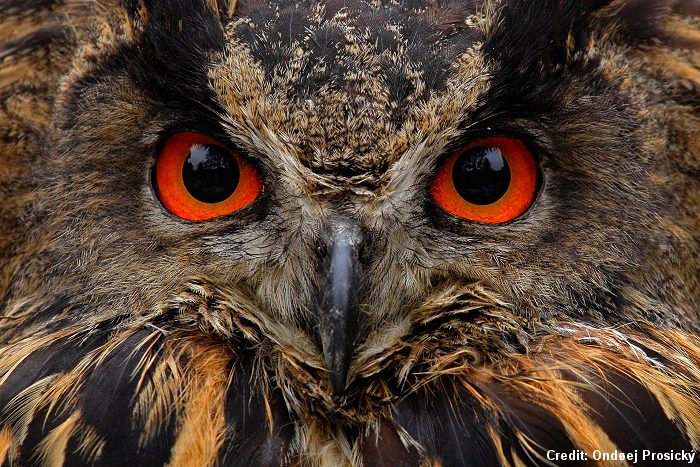
Eagle-owl
The giant eagle-owl (Bubo bubo) has returned to Denmark. Credit: Ondřej Prosický, Dreamstime.com.

In 1884 the last Danish Eagle-owl was shot in central Jutland. Not until 100 years later the giant owls carefully returned. A single pair started breeding in 1984 in the most southern part of Denmark, close to the German border. Since then the eagle owls have taken back their lost land and have practically invaded the peninsula of Jutland.

Eagle Owls have benefited from large-scale reintroduction or reinforcement programmes in Europe. In Germany during the 1970s and 1980s, 1,500 birds were released and the species is now a widespread breeder in Schleswig-Holstein – just south of the Danish border.
In the laters years the giant owls have migrated into Denmark. It is estimated that about 120 pairs now are breeding in Jutland, Denmark. The Eagle-owls seem to do well in most types of habitat if there are available nesting spots and adequate prey.

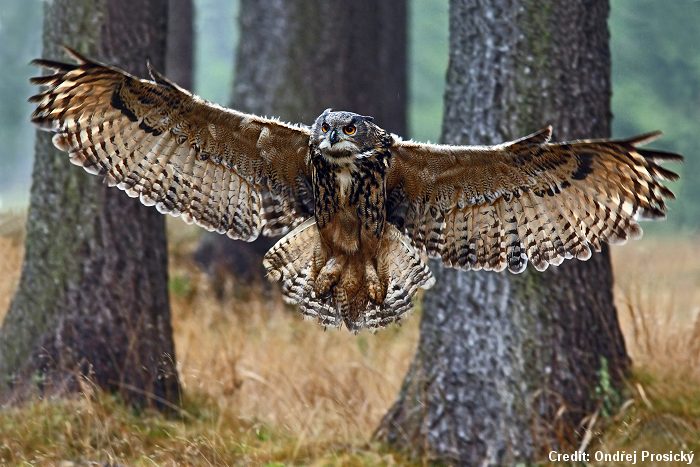
The Eurasian Eagle-owl can reach a wingspan of 1.8 meter (6 feet).Credit: Ondřej Prosický, Dreamstime.com.

A powerful hunter.
The Eurasian Eagle-owl (Bubo bubo) is the largest owl in Europe – and probably in the world. They can reach a wingspan of 1.8 meter (6 feet).

Their large, powerful feet and strong flight makes them powerful hunters. Like many raptors, these owls are top predators. They are strong enough to kill a cat or a young fox.

Eurasian Eagle-owls usually hunt at night from a perch or while flying low over the ground or treetops. They are silent hunters that use their keen eyesight and hearing to locate and capture prey. These owls are not picky eaters. They mainly eat small mammals such as rats but also hunt other birds, including other raptors. They also prey on amphibians, reptiles, fish, and insects.

Source: dof.dk, peregrinefund.org, britishbirds.co.uk, Wikipedia.

Record number of eagles are breeding in Denmark

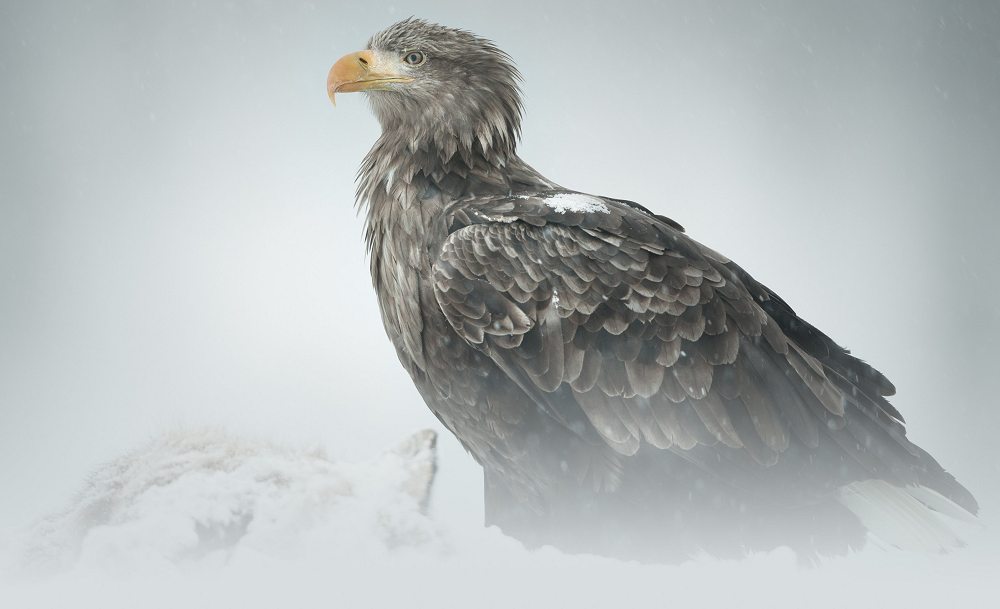
The white-tailed eagle is North Europe’s largest bird of prey. Credit: Andrew Astbury/Dreamstime.com

After being nearly non-existent for about a century, the White-tailed Eagle and the Golden Eagle have successfully returned back to Denmark.

When the Danish Ornithological Society conducted its annual eagle count in 2017 more than 400 eagles were spotted across the country.
A total of 395 white-tailed Eagles and 14 golden eagles were observed during the official count.

The white-tailed eagle population was nearly non-existent in Denmark for up to a century before making a comeback in 1996.

The white-tailed eagle is North Europe’s largest bird of prey. With its impressive wingspan of up to 2.5 m, and the very square flight silhouette, it rather resembles a flying door. Adult sea eagles can also be recognised by the white tail, the bright head and yellow beak.

Eagle experts predict that by 2020 there will be at least 100 pairs of breeding white-tailed eagles in Denmark. The about 8.000 kilometer long coastline and many fjords and lakes, is a perfect landscape for the white-tailed eagles.

Denmark set wind power record – again!

0

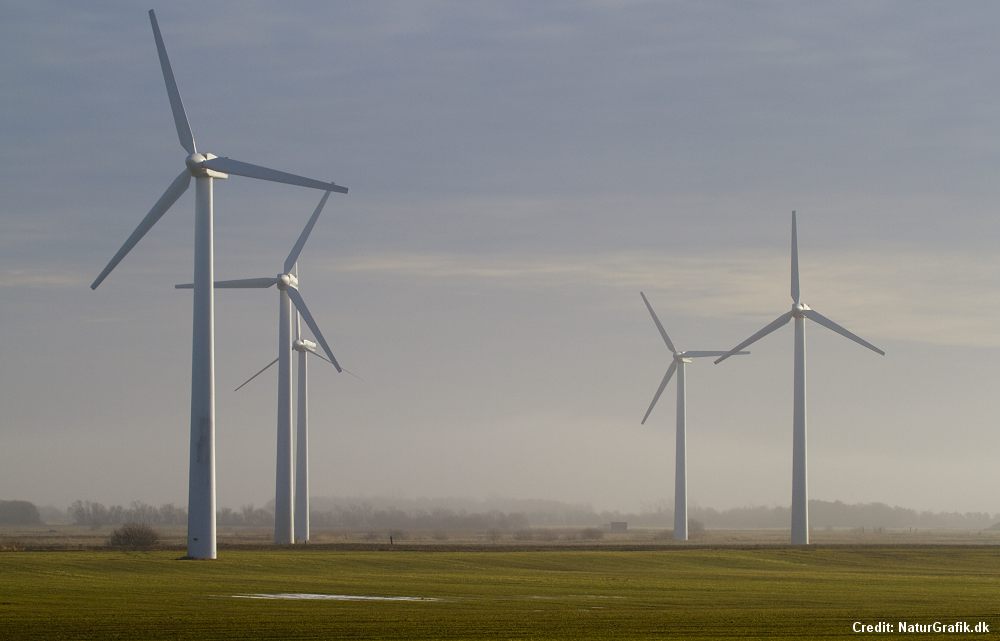
2017 was a record year for Danish wind power and Denmark is on track to surpassing its EU energy targets, according to the Danish Ministry of Energy, Utilities and Climate.

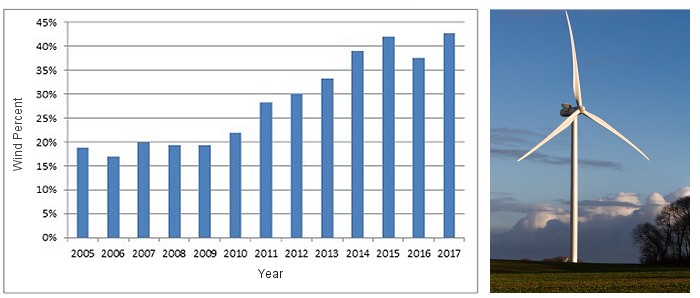
More than 43 percent of Denmark’s electricity consumption was supplied by land and sea wind turbines in 2017. This is the highest-ever level of wind energy provision in Denmark.

The past nine out of ten years have been record-setting for Danish wind power. The new record surpasses the previous 2015 record of 42 percent.

The wind energy share of Denmark’s electric energy system since 2005. Graphic: Ministry of Energy, Utilities and Climate.

“With the wind power production record, Denmark places a green flag on the world map. We once again show the whole world that Denmark has the world’s best energy system,” Minister of Energy, Utilities and Climate Lars Christian Lilleholt said in the press statement.

Further records are likely to be set by Denmark in coming years, with new offshore wind farms in the offing.

The Danish government is working for Denmark to have at least 50 per cent of its energy needs covered by renewable energy, such as wind and solar power, by 2030.

Sources: thelocal.dk, Ministry of Energy, Utilities and Climate.

The Mute Swan: National Bird of Denmark

1

The Mute Swan (Cygnus olor) became the national bird of Denmark in 1984, replacing the Skylark (Alauda arvensis). At first the Mute Swan was not granted officially status as the national bird of Denmark by law but by a popular vote held by a Danish TV show.

No trumpets but vibrant throbbing of the wings.
The Mute Swan is not completely mute. It is less vocal than the noisy whooper and Bewick’s swans which communicate in the air emitting strong trumpets. However, mute swans do make a variety of grunting, hoarse whistling, and snorting noises, especially in communicating with their cygnets, and usually hiss at competitors or intruders trying to enter their territory. The most familiar sound associated with mute swan is the vibrant throbbing of the wings in flight which is unique to the species. The mute swan is one of the heaviest flying birds.

“The Ugly Duckling”
The Mute Swan probably derives its popularity in Denmark because of its role in “The Ugly Duckling” by the Danish poet and author Hans Christian Andersen (1805–1875).

The Mute Swan is native to Denmark. The nest is build near water, or on floating islands. As material they use herbs and branches of small thickness. The structure can have a diameter of two meters.

Sources: worldatlas.com, 10000birds.com, wikipedia, nationalpedia.com.

Visit the worlds largest limestone mine

0
Limestone mine
Visit the Wolrds largest Limestone mine. Credit: NaturGrafik.dk.

1,000 years of limestone mines under Denmark.

In Mønsted Limestone Caves in Central Jutland there are more than 60 kilometres (about 37 miles) of underground paths. Some are as large as cathedrals and others are so narrow that a grown man cannot walk through them upright.
The caves are very old. When Denmark was becoming an increasingly Christian nation around the 11th century, limestone mining was a profitable industry because the stone was used in cathedrals.

An underground lake.

These tunnels open up into various cave “rooms,” some of which contain entire underground lakes. Visitors to the Mønsted Kalkgruber museum can wander through the caves on their own or take a train ride tour throughout.

Lots of space for adventure.

Inhabited by more than 18,000 bats.
The limestone caves are inhabited by more than 18,000 bats during winter. Mainly Daubenton’s bat (Myotis daubentonii) but also The Pond bat (Myotis dasycneme). During spring and summer the bats are active all over Jutland feeding on insects.

Visit the caves.
See opening hours and find more information about the caves at Monsted-Kalkgruber.dk

Sources: atlasobscura.com, monsted-kalkgruber.dk.

Denmarks largest land-breeding predator

The Grey Seal

After a hundred years of absence from Danish waters, first of all, due to hunting, the Grey Seal has reintegrated over the past fifteen years and now occurs regularly in locations in the Baltic Sea, the Wadden Sea and the Kattegat. The Grey Seal now again breeds a few places along Danish desolated coasts.

Denmarks largest land-breeding predator.
The scientific name of the grey seal, Halichoerus grypus, is Latin for “hook-nosed”; males have large, arched snouts.
The Grey Seal is a large seal, with bulls in the eastern Atlantic populations reaching 2.5–3.3 m (8.2–10.8 ft) long and weighing 170–310 kg (370–680 lb); the cows are much smaller, typically 1.6–2.0 m (5.2–6.6 ft) long and 100–190 kg (220–420 lb) in weight. Individuals from the western Atlantic are often much larger, males reaching 400 kg (880 lb) and females weighing up to 250 kg (550 lb).
Danish scientists are familiar with examples that Grey seals have killed Harbour seals and eaten them. They are bigger and more aggressive. Some of them may even have specialized in Harbour seals and actually also on Harbour porpoises.

The origin of the mermaids
The view of a grey seal is that of a bobbing head as the seal rises out of the water for a look above the surface. At first glance seals adopting this behaviour look remarkably like people bobbing up and down in the water, a fact which undoubtedly contributed to legends of mermaids.

Source: dce.au.dk, jp.dk, NaturGuide.dk, irelandswildlife.com, Wikipedia.

The untamed sand dunes of Rubjerg

0
The Lighthouse was expected to fall into the sea before the year 2020. In 2019 it was moved 70m inland.

If you want to experience wild and untamed nature in Denmark then you should visit Rubjerg Knude Lighthouse. Here you will find massive hills of sand covering the area surrounding the old lighthouse.

The Rubjerg Knude lighthouse (in Danish: Rubjerg Knude Fyr) is located on the coast of the North Sea in Rubjerg, in the Jutland municipality of Hjørring in northern Denmark.
Close by the small and cozy town of Lønstrup you will find Rubjerg Knude with the high and impressive sand dunes. Some 90 meters above sea level and still growing in size.

It is a very dramatic nature scenery where the sea frequently takes a “bite” of the coastline and several meters disappears every year.

The Lighthouse was expected to fall into the sea before the year 2020 – now it has been moved 70m inland.
For about 120 years, the Rubjerg Knude lighthouse has been perched on a sand dune on the northern Danish coast, but coastal erosion from North Sea winds threatened to topple it into the sea. In 2019 the lighthouse was moved 70m inland, to give it a 40-year reprieve.

Rubjerg Knude Lighthouse is a popular excursion target for both locals and tourists. If you are travelling to North Jutland, you should not miss this opportunity to experience this historical lighthouse. The lighthouse is still open for visitors and free to enter.

Rubjerg Knude
Rubjerg Knude Lighthouse is a popular excursion target for both locals and tourists.

When the lighthouse was built it was more than 200 m from the beach and there were no large dunes around it. Over time the sea moved in closer and the wind blew large amounts of sand up from the cliff. In the late sixties the sand dunes were so high that it was sometimes impossible to see the lighthouse from the sea. The lighthouse was first lit on December 27, 1900. On August 1st 1968 the fight was given up against the sand dunes and the sea – and the light was lit for the last time.

Sources: VisitDenmark, VisitNordjylland, Wikipedia.