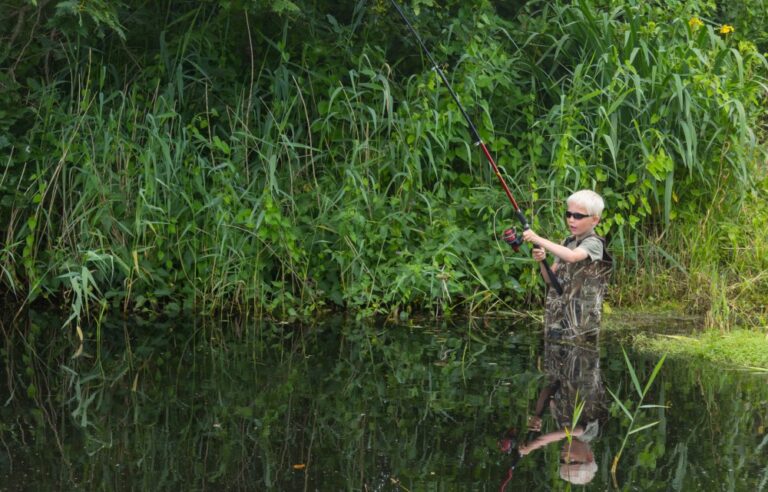
Denmark offers some great fishing experiences! Whether you love sea fishing, river angling, or peaceful lake fishing, you’ll find incredible spots all year round. With clean waters and rich fish stocks — like sea trout, cod, pike, and salmon — there’s something for every fishing enthusiast. In Denmark there is something for both the freshwater and saltwater angler.
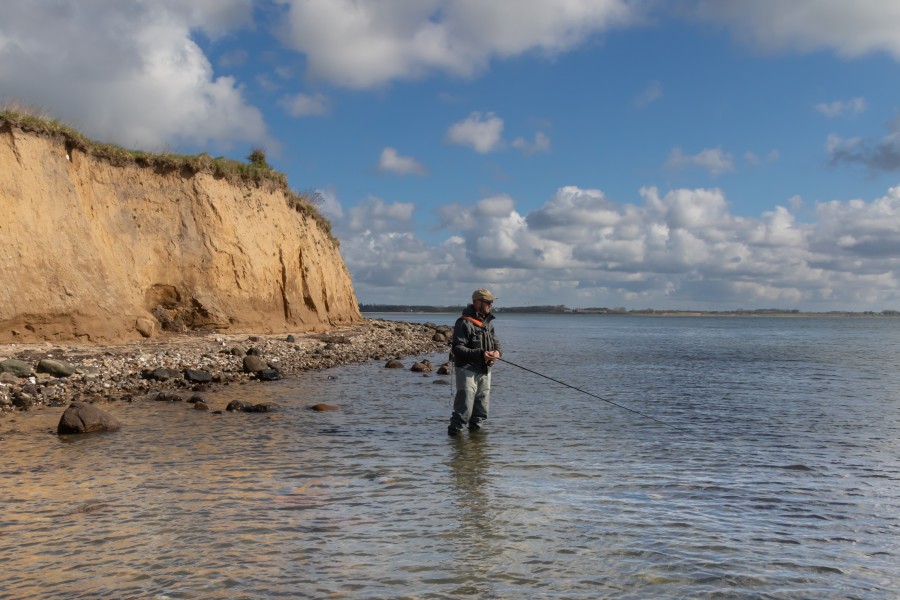
With 7,000-8,000 kilometers of coastline, Denmark offers a unique coastal sea trout fishing scene. As a foreigner, you are very welcome to angle in Denmark. In order to do so, you have to buy a fishing license which is easy to buy online. Credit: Niels Lisborg.
Denmark is surrounded by water, meaning there’s no shortage of places to cast a line. There’s the North Sea to the west and the brackish Baltic Sea to the east, both teeming with a cast of unique fish. Inland, you’ll find plenty of rivers and lakes.
Many Danes enjoy recreational fishing – especially angling – as sport or just to relax. Approximately 300,000 people engage in recreational fishing activities in Denmark. As a foreigner, you are very welcome to angle in Denmark.
If you are between 18 and 65 years old, you must buy a fishing license (“fisketegn”) to fish. Some areas, especially private lakes or rivers, might require additional permission from the landowner or a special day-pass. Fishing in the sea or from the beach (saltwater) is generally allowed with the regular license. You can buy it here: Angling license in Denmark. You can buy day pass, weekly card or annual card.
You can finde much more information about fishing in Denmark at FishinginDenmark.info. At this map you can find good fishing spots – and also see conservations zones.
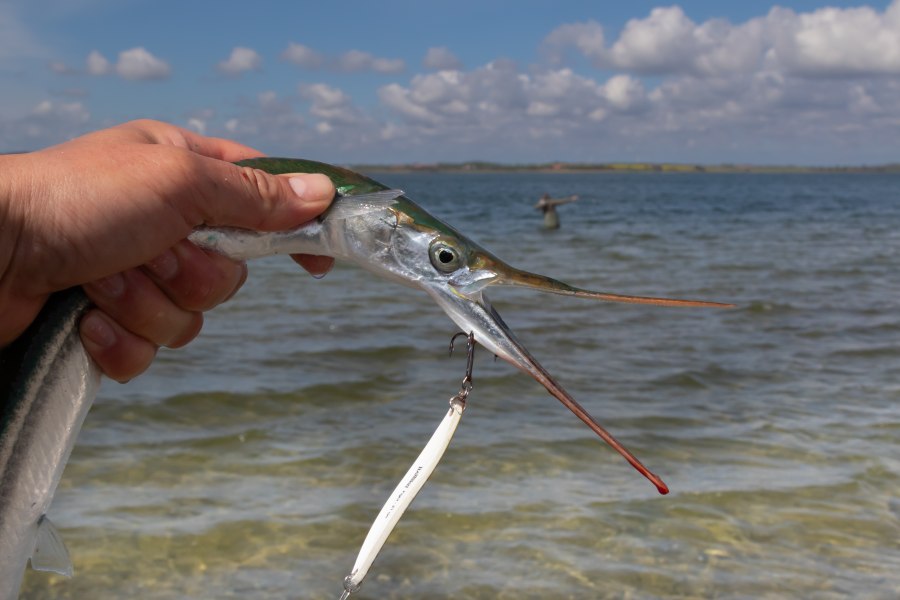
The garfish is a migratory fish. They migrate in huge shoals along the Danish coasts and typically arrive in Danish waters from mid-April to mid-June. Credit: Niels Lisborg.
Good to know: For several fish species, a minimum size limit and/or a closed season are imposed when the fish have gathered to spawn. The purpose is to ensure that the fish have time to spawn and thereby maintain a population.
Did you know that the revenue from fishing license sales goes towards fish care, release of fish, and watercourse restoration?
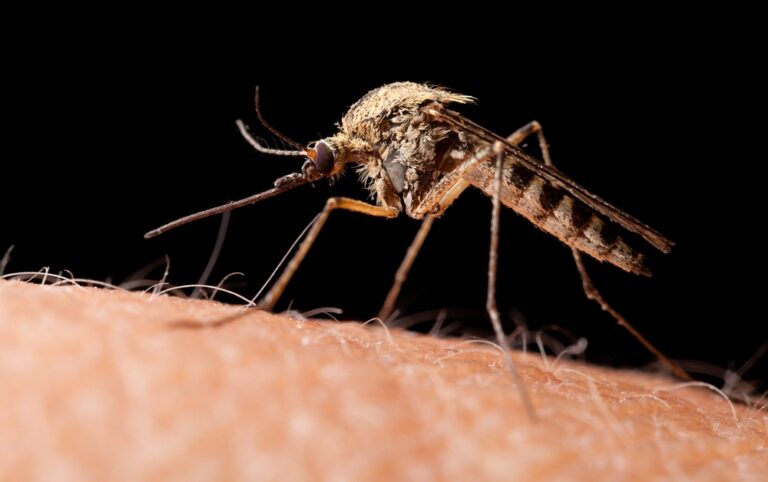
Denmark certainly does have mosquitoes, but they’re generally not as numerous or as aggressive as in warmer, more humid countries. There are more than 1,000 species of mosquitoes living in Denmark – but only around 35 species of biting mosquitoes. Did you know that only female mosquitoes bite humans, as they require the protein to breed?
There is no dangerous mosquito species – like malaria- or dengue-carrying ones.
From very few mosquitoes close to the sea to quite many in wetlands and forest areas.
There are generally few mosquitoes on the coasts – and out in the sun as most mosquitoes prefer shade. Generally, mosquitoes in Denmark are only a particular problem during dusk hours. They generally appear around mid-May and disappear again towards the end of September.
They’re mostly harmless but can still be very annoying and itchy! Are you’re planning a summer trip to Denmark and will be near wetlands or forested areas, a little mosquito repellent wouldn’t hurt. You can buy local mosquito repellent at pharmacies and most grocery stores.
Mosquitoes go through four stages in their lifecycle: from egg to larva to pupa before finally becoming an adult. Water is essential for mosquitoes to breed, as mosquitoes spend the larval and pupal stages of their lifecycle in water.
As annoying as mosquitoes are to us, they actually do play a role in ecosystems?
Mosquito larvae live in water and are eaten by fish, amphibians, and insects. Adult mosquitoes are a snack for birds (especially swallows, swifts), bats, frogs, dragonflies, and spiders. Some species depend on mosquitoes as a reliable food source during specific times of the year. While many female mosquitoes feed on blood to make eggs, male mosquitoes drink nectar. In doing so, they pollinate certain plants. In complex ecosystems like wetlands, mosquitoes are part of the nutrient cycling process—breaking down organic matter when they’re larvae and supporting higher levels of the food chain as adults.
Mosquitoes and gnats are particularly significant food sources, especially during dawn and dusk when these insects are most active. Research has shown that a colony of barn swallows can consume over 60 million insects during a single breeding season.
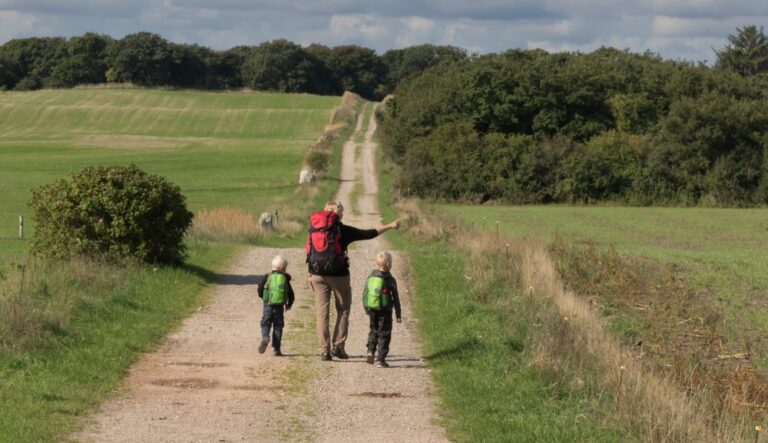
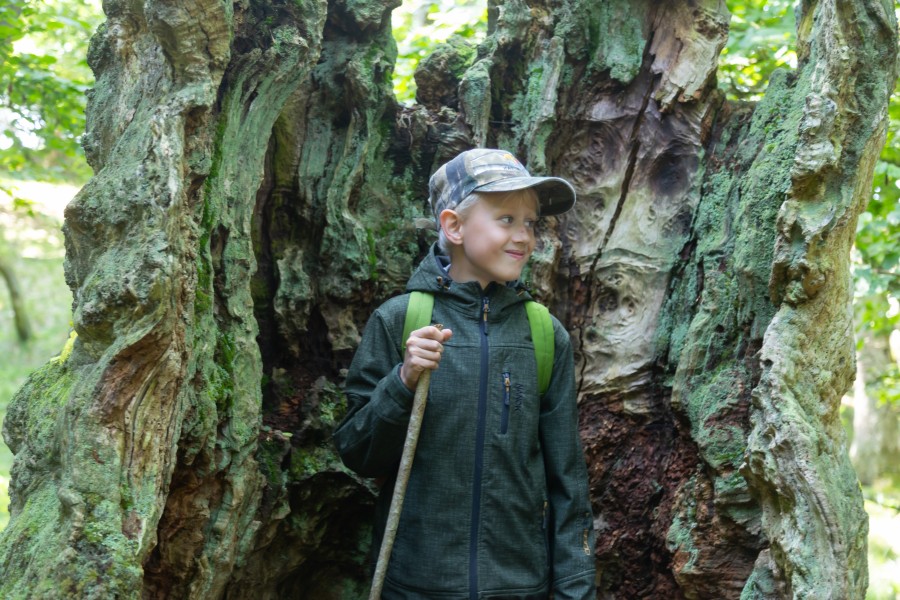
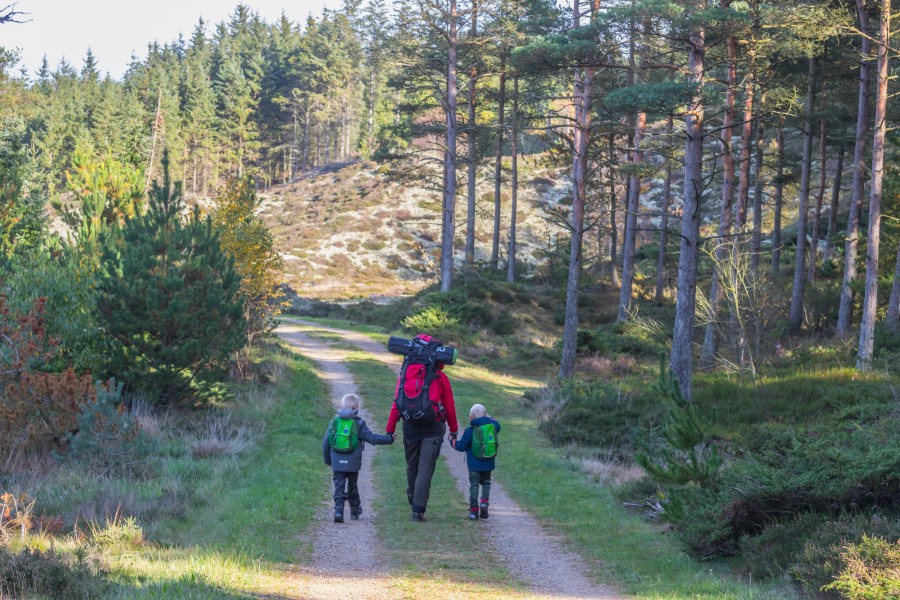
Hiking holidays with the little ones can be a fantastic experience, in fact one of the most memorable and intense family holidays with keywords such as presence and togetherness. However, hiking with children is rarely without challenges. The result is not always what the adults expected before the trip. A hiking holiday where both adults and children have fun requires a little planning in advance. The time spent preparing before the trip can come back tenfold in the form of fun, presence and exciting experiences for everyone along the way. Here is some input and advice on what you can focus on to have some great hiking trips with your children.
Align your expectations
As with all other holidays you spend with your children, you should first align your expectations. A five-year-old often does not have quite the same expectations of what a good hiking holiday should include as a 12-year-old or a 40-year-old. Talk to the whole family. Both about what it means to be on a hiking holiday, where you are going and what you are going to do on the trip. Maybe cooking over a campfire?, spending the night in a tent? It is also important to talk about the challenges you may encounter on the hike. Also listen to the children’s wishes and input so that they feel ownership of the trip.
Hiking holidays can be a fantastic experience, in fact one of the most memorable and intense family holidays with keywords such as presence and togetherness.
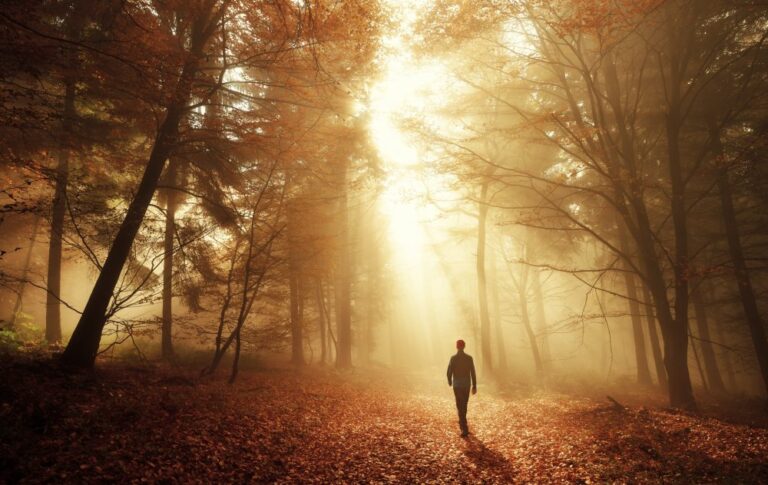
Denmark is a great country for hiking — but it’s a bit different from the typical “big mountains and rugged trails” kind of hiking you might find in places like Norway or Switzerland. Denmark is mostly flat or gently rolling, so the hiking is more about coastal trails, forests, cliffs, and wide open landscapes. It’s very peaceful, with beautiful seaside views, forests, and lots of well-marked trails.
On the many Danish hiking routes, there is often the opportunity for breaks at “child height” along the way. It can be the animals in the field or an exciting, fallen “balancing tree trunk” in the forest. As adults, we tend to focus on reaching the next goal, where children tend to lose focus along the way – and would rather go right than straight ahead or “just have to see that anthill over there”. As focused (tired) adults, children’s sidestepping can easily be perceived as sabotaging skipping actions. You should therefore store up mental energy and extra air in advance when planning a hiking holiday with children.
Start with shorter hikes
If this is your first time going, it can be an advantage to start with half-day trips. Get a fixed base in the form of a summer house, bed & breakfast, campsite or similar. With a fixed base and shorter trips, you can combine great nature and hiking experiences without lugging around too much luggage at the same time. It also has the advantage that children often feel safer when they return to something familiar every day.
If this is your first time hiking with small children, it may be an advantage to start with half-day trips.
Did you know? Denmark is one of the safest countries in the world for travellers.
Success and positivity.
As I mentioned at the beginning, a hiking holiday can be a fantastic experience for the whole family. But there are some prerequisites that can help the good mood on the way. Hiking holidays are often the adults’ suggestion and they are therefore also the ones who should show the way to a good holiday. Show enthusiasm! It is contagious. Start the first day with a short and easy hike, where the mood is high. If the children have a successful experience on the first day, there is a greater chance of success for the rest of the holiday.
An simple hike is to walk along the beach. It’s easy to find your way and sometimes the sea wash up interesting things.
Denmark’s public access laws (the “Allemandsret” spirit) make it easy to explore nature, and you’ll find a lot of “shelters” (simple open cabins or tent areas) where you can camp for free or very cheaply.
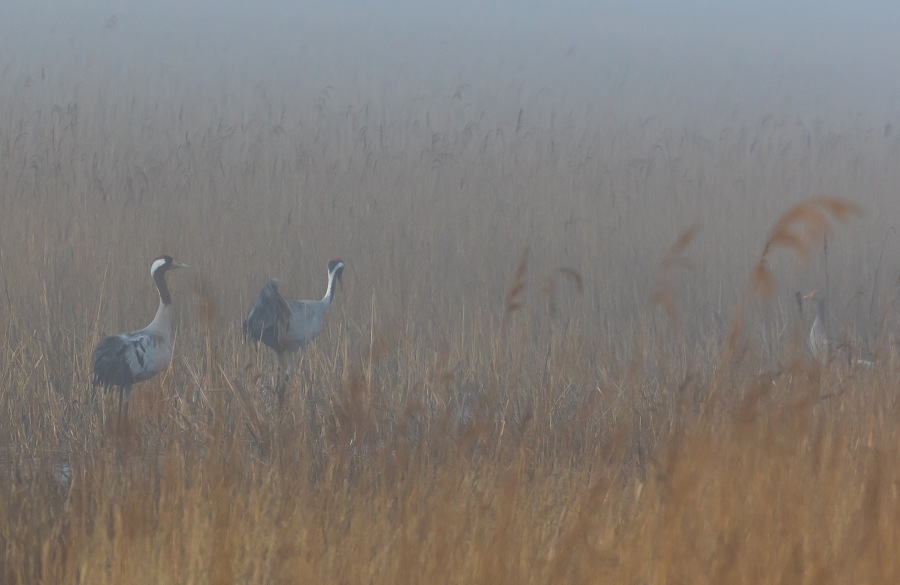
Tall, elegant, and unmistakably trumpeting, the common crane (Grus grus), also known as the Eurasian crane, is one of Europe’s most evocative wetland birds.
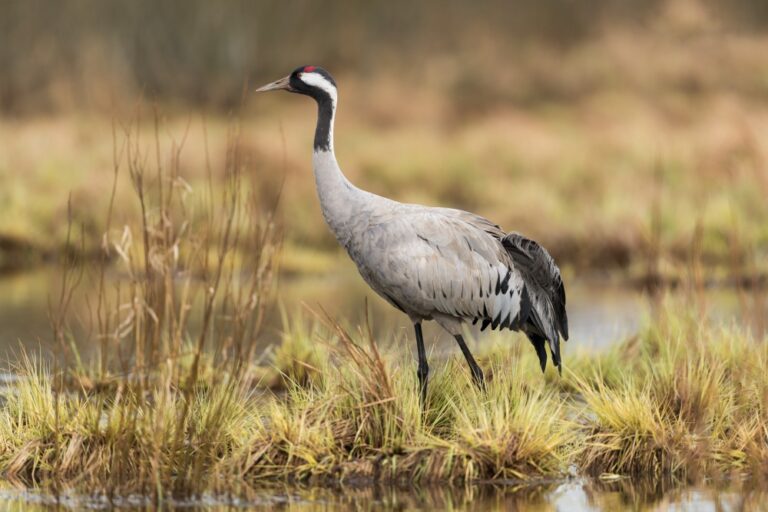
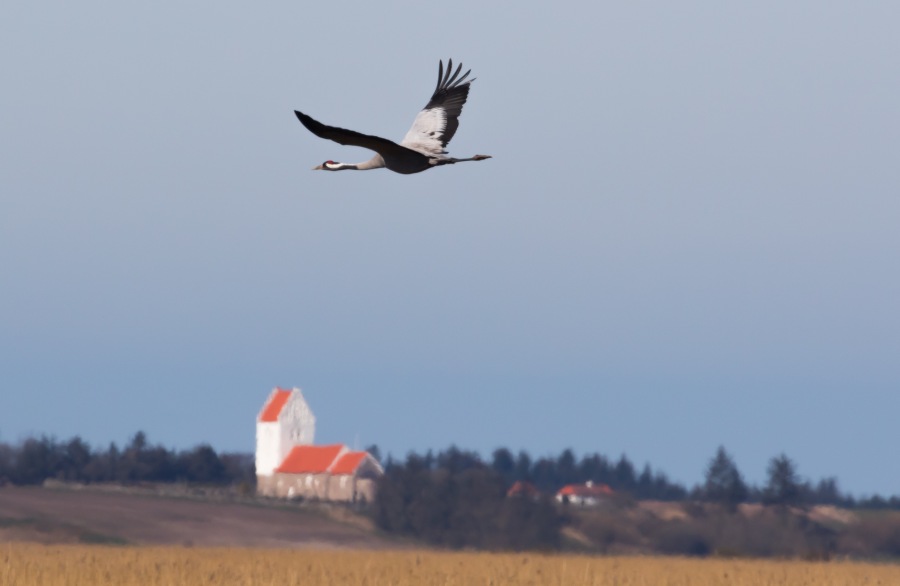
The common crane (Grus grus) is a tall, graceful wetland bird native to Eurasia. Adults stand about 110–130 cm (3 ½–4 ft) high, with a wingspan of 180–240 cm (6–8 ft) and a slim, straight bill. Their plumage is soft slate‑grey, set off by a black throat “bib” and a white stripe that sweeps from the eye down the neck. A bare patch of crimson skin crowns the head, most vivid in the breeding season.
Cranes – one of Europe’s most evocative wetland birds. Credit: Niels Lisborg
Extinct in Denmark for almost 100 years
After 20th‑century declines from drainage and persecution, European numbers are climbing thanks to wetland restoration and protection; the global population now exceeds 700 000. Also in Denmark the common crane continues to thrive in Denmark. The shy bird with the spectacular dance was extinct in Denmark for almost 100 years, but is now back as a stable breeding bird with around 1000 breeding pairs.
Whether glimpsed as a soaring V‑formation or watched dancing on a misty bog, the common crane embodies the wild pulse of Denmarks wetlands and the promise of their recovery.
A crane flying over a Danish scenery with a traditionel church in the background. Credit: Niels Lisborg.
The spring migration is best seen over the islands of Lolland-Falster and Zealand, while in the autumn the most cranes are usually seen over Bornholm. One of the best places to see cranes in the autumn is in the Vejlerne Nature Reserve in North Jutland. A large part of the North Jutland cranes are gathering here before their migration in October continues south. In recent years, and in line with climate change, many hundreds of cranes have begun to winter in Denmark, where they gather at large common roosting sites.
Sleek yet powerful, the common crane is both an emblem of wilderness and a conservation success story.
Can spiders be beautiful? There are probably divided opinions on that, but a reasonable candidate would be the male ladybug spider.
The Ladybird Spider (Eresus sandaliatus) is one of the Denmark’s rarest and most spectacular spiders among the about 500 species of spiders in Denmark. It most often lives on heaths and sandy, open slopes. You won’t find it in the shady forest.
Ladybird Spiders spend most of their lives in burrows in the ground, which are vertical, silk-lined and crowned with a canopy of silk – but in the spring they emerge from their underground burrows. It is mating season for the ladybird spider (Eresus sandaliatus).
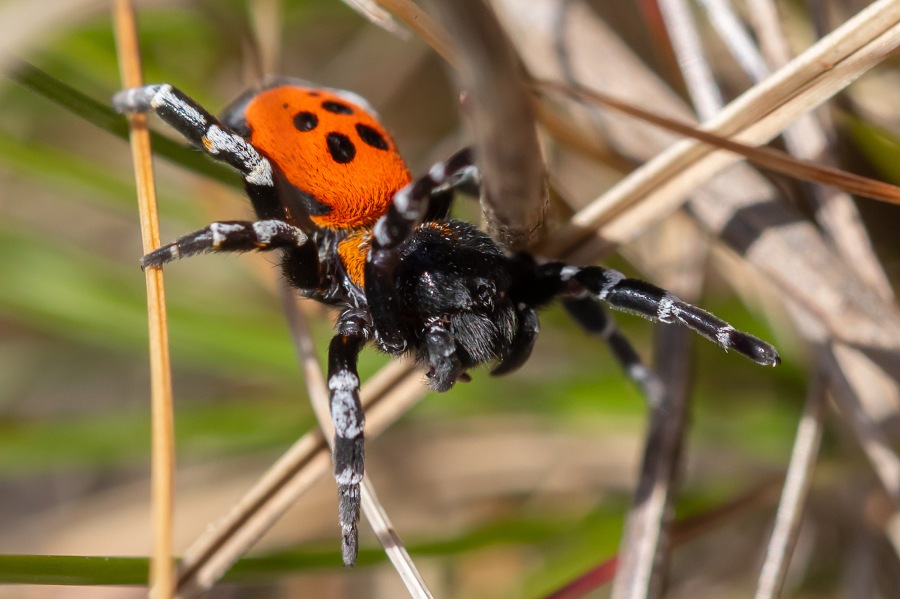
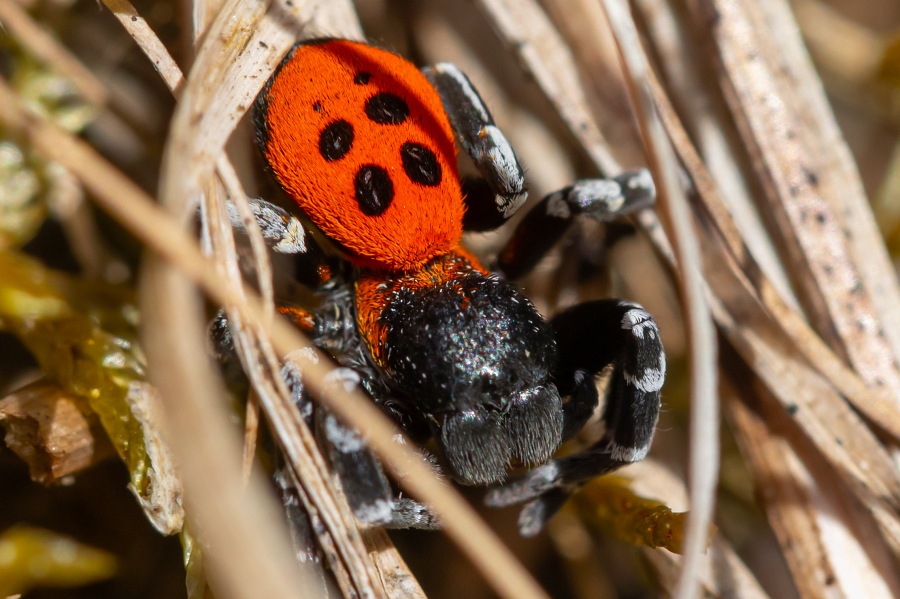
The mature male, on his final moult, transforms into the charismatic form with a striking red abdomen. Credit: Niels Lisborg.
The ladybird spider lives on warm, south-facing slopes with short vegetation. Here it has its underground tunnel, where it lives most of its life, but in the spring the males emerge into the light and can be seen crawling around in search of females. That is why in the spring you can best experience Denmark’s most beautiful spider.
The Ladybird Spider is a member of the Eresidae family known as “velvet” spiders. The mature male, on his final moult, transforms into the charismatic form with a striking red abdomen with pairs of black spots – the reason for the name “ladybird”. This transformation is likely to be predator protection during his day time search for a female. Red is nature’s warning color.
Denmark’s most beautiful spider? Credit: Niels Lisborg.
A powerful bite that pierces the carapace of dung beetles
The ladybug spider has a powerful bite that can bite through the hard carapace of beetles that unsuspectingly crawl across the spider’s web. When the spider down in the burrow senses activity at the entrance, it rushes up and grabs the prey with its powerful bite. Occasionally, the spider’s secret burrow is revealed by the remains of prey lying around the entrance.
And the size? The males are about 8-10 mm long plus legs, while the females’ bodies are slightly larger, 10-16 mm long.
Denmark has the objective of increasing its total area of forest to approx. 20-25% before the end of this century. Credit: NaturGrafik.dk.
The history of Danish forests, from 2 % to now 15 % of the land area.
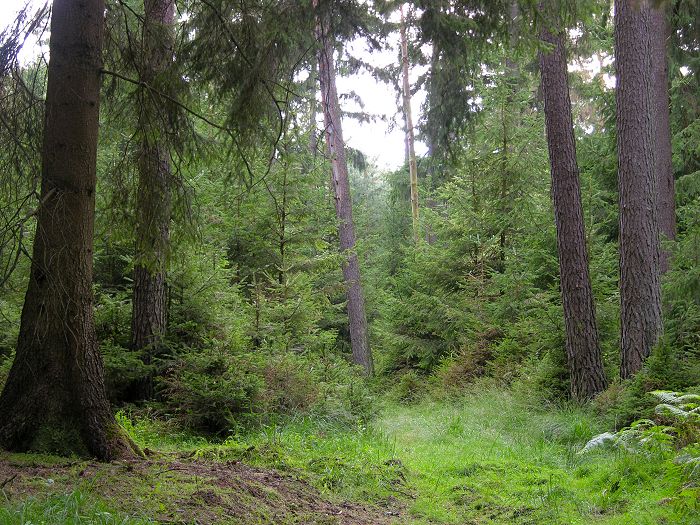
Did you know that most of Denmark originally was covered by forest, but after centuries of uncontrolled felling and clearance for agriculture, just 2-3% of Denmark was covered by forest around 1800. Since adoption of the Danish Forest Act in 1805, forest clearance has been banned in Denmark, and at the same time great efforts were initiated to plant more forests. The overall area of Danish forests has therefore increased significantly, and it is still increasing.
The forest area in the latest forest statistics is calculated at 651,757 ha, which constitutes 15.1 percent of the total Danish area. The forests are unevenly spread, with much forest along the high ridge of Jutland, in northern Zealand and on Bornholm. There is a lot of smaller forestland near large towns and cities.
Objective of increasing the total area of forest
Denmark has the objective of increasing its total area of forest to approx. 20-25% before the end of this century. This means that more CO2 will be prevented from release into the atmosphere, groundwater will be protected from fertiliser resides from agriculture, and a more varied natural landscape will be created, with a high degree of biodiversity.
Most species of deciduous tree, such as oak and beech, are indigenous to Denmark, while conifers have been imported over the past 200-300 years. One of the most common tree species in Denmark is the Norway spruce, imported from other European countries like Sweden and Germany, while other species such as Sitka spruce and Douglas fir have been imported from North America.
We receive a lot of questions about Denmark’s nature. A frequent question is whether there are bears in Denmark?
The answer is no – but was once upon a time…
The brown bear (Ursus arctos) migrated to Denmark about 13,500 years ago. The warmer climate caused the seas to rise, and the previously large mainland area that included what is now Denmark was transformed into an island kingdom that resembles much of the Denmark we know today. This also meant that the bears’ hunting grounds were reduced, while the possibility of new immigration from outside was limited.
Human hunting of bears continued – and contributed to drive the bear from the land we know today as present-day Denmark. The youngest, known bone finds from – presumably – “Danish” bears come from two settlements on Djursland – about 6,500 years ago.
Bears in Denmark have thus left no trace on Danish soil for 6,500 years.
The ox-eye daisy, Leucanthemum vulgare, also known as the marguerite, is Denmark’s national flower. This perennial herbaceous plant belongs to the family Asteraceae and is characterized by its striking white ray florets surrounding a central cluster of yellow disc florets. The flower is native to Europe, it thrives in meadows, grasslands, and along roadsides, where it plays a role in supporting pollinators such as bees and butterflies.
The Danish Marguerit Route
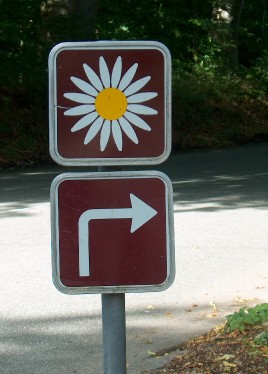
In Denmark, Leucanthemum vulgare is not only admired for its delicate beauty but also cherished as a symbol of the country’s natural heritage and cultural identity. The Danish Marguerit Route (in Danish: Margueritruten) is a scenic tourist driving route that winds through Denmark, highlighting some of the country’s most beautiful and culturally significant places. Named after the marguerite daisy, which is Queen Margrethe II’s favorite flower and a national symbol, the route is marked by brown signs with a white marguerite flower.
Key Features:
Length: Around 3,600 kilometers (2,237 miles).
Type: It’s a loop, so you can start and end at any point along the way.
Purpose: To guide tourists through natural landscapes, historic sites, charming towns, manor houses, beaches, and cultural attractions.
What You Can See:
Castles and Palaces (like Frederiksborg or Kronborg)
UNESCO Heritage Sites (e.g., Roskilde Cathedral)
Viking heritage sites
Coastal cliffs and beaches (e.g., Møns Klint)
Quaint villages and rolling countryside
Museums, art galleries, and local farms
How to Follow the Marguerit Route:
You don’t need a special map—just look for the distinctive signs along the road. However, there are also apps and digital maps available that provide detailed guides, suggestions, and GPS help for travelers.
It’s a perfect option if you want a leisurely road trip and a deep dive into Denmark’s countryside and culture—especially if you enjoy spontaneous stops and scenic detours.
Wolf population in Denmark reaches to above 40 wolves. Highest level in recent times.
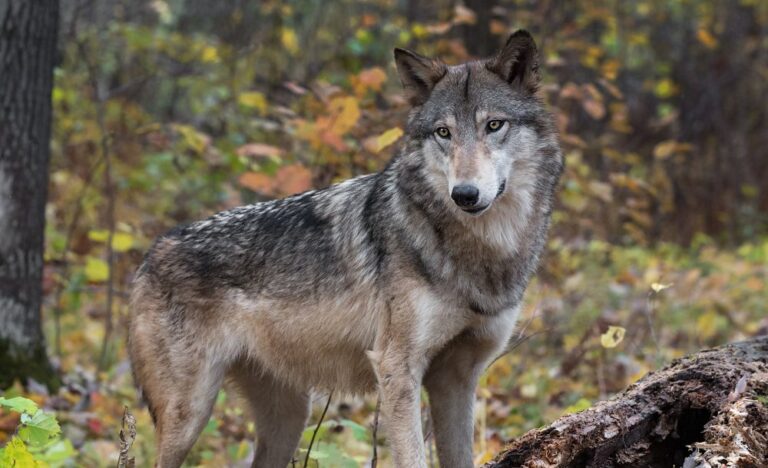
New survey shows steady progress for Denmark’s wolves, which now number six packs, two pairs and one lone territorial wolf, corresponding to around 42 animals – according to the National Center for Environment and Energy at Aarhus University. The wolf now appears to be firmly established in Denmark.
Wolves have become a permanent part of Danish nature with breeding pairs in both Central, Western and Northern Jutland. The development so far shows a population on the rise, supported by immigration from Germany. Since the first registered puppy birth in 2017 (the first time in 200 years), 13 litters have been documented with a total of at least 84 puppies.
Many farmers, especially sheep farmers, are strongly against wolves and several Danish right-wing politicians want it to be easier to shoot wolves in Denmark. Wolves kill several livestock animals annually.
Afraid of wolves
Lack of knowledge and awareness of wolves among the population means that many Danes are still afraid of wolves – and fear creates resistance. At the same time, one-sided news articles with sensationalist headlines are often published in certain Danish newspapers, which strengthens the resistance against wolves.
A new poll shows that one third feel unsafe about the return of wolves to Denmark. Two thirds believe that wolf protection should be less restricted or completely ended.
Are wolves dangerous to humans?
Wolf attacks on humans in modern Europe are extremely rare. The few documented attacks in Europe over the past 200 years have primarily been carried out by rabies infected wolves. There have been no recorded attacks on humans in Denmark since the wolf’s return to the wild in 2012.
According to a report titled “Wolf attacks on humans: an update for 2002-2020” by the Norwegian Institute for Nature Research, the risks associated with a wolf attacking a human are “above zero, but far too low to calculate”.
More on the subject? The key to living with wolves in Europe? Read more at rewildingeurope.com.
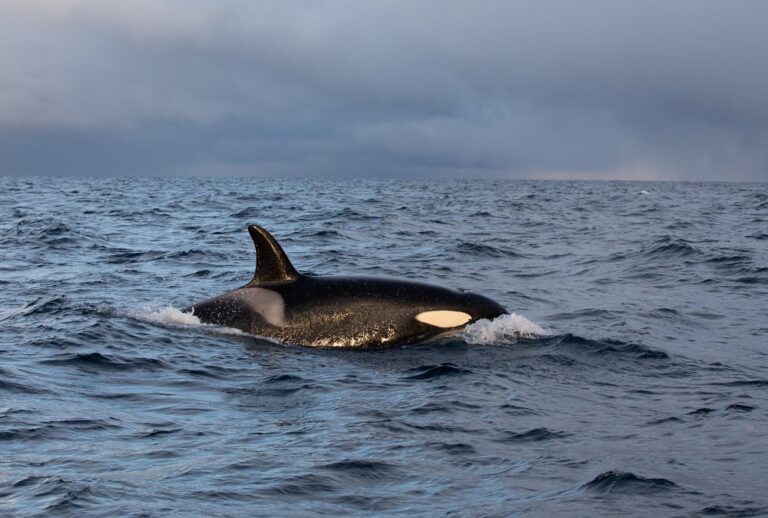
Visitors of the large marine mammals have become more frequent.
In recent years, killer whales – also known as orcas, have been seen several times in Denmark. The large beautiful marine mammals have become more frequent in Danish waters. Killer whales are most often observed from the beach at Skagen. Perhaps because there are many birdwatchers with binoculars here.
It is believed the name killer whale derives from their original name “whale killers” given to them by sailors who saw them hunting whales. In Danish the killer whale is named “spækhugger” meaning “lard stealer”. Their Latin name, Orcinus orca, also reflects this observation of killer whales feeding on large whales. The killer whale is the world’s largest dolphin with a global population of approximately 50,000. It is found in almost all the world’s oceans.
The largest males can weigh 10 tons and be 9.8 meters long. Their dorsal fin can be 1.8 meters long.
Did you know that 19 species of whales have been registered in Danish waters?
Killer whales are generally not aggressive towards humans
There have been very few documented cases of killer whales attacking humans in the wild (no fatalities), and these were most likely a result of the animal feeling threatened or mistaking a human for prey.
The age is up to 80 years for females, while males can be up to 60 years old. The species can swim up to 54 kilometers per hour.
The killer whale’s food consists of, among other things, baby whales, seals, fish and seabirds.